Bets and Payouts
Read the layoutequipmentLayoutThe printed betting grid on the table. Also: table, felt, cloth.Read full →, name the bet. Ten questions on where chipsmoneyChipA token representing a fixed amount, placed on the layout to make a bet. Also: check.Read full → go and what they pay, from a pool of fifteen.
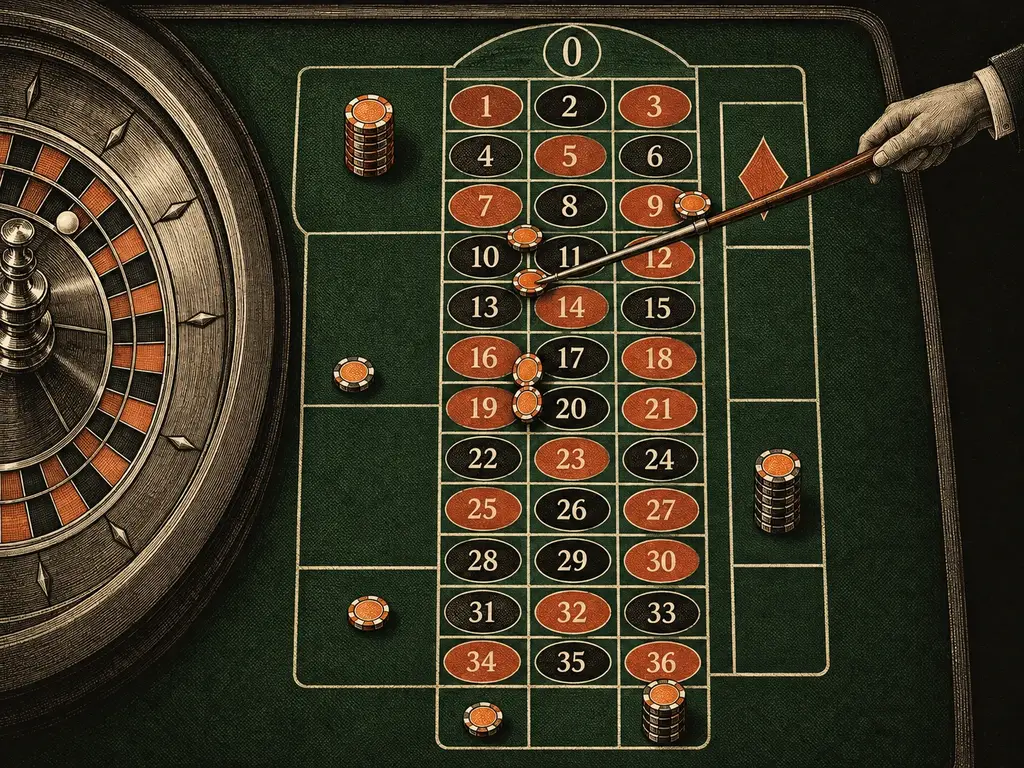
SplitsbetSplitTwo adjacent numbers, pays 17:1.Read full →, streetsbetStreetThree numbers in a row of the layout, pays 11:1. French: transversale.Read full →, cornersbetCornerFour numbers sharing a corner on the layout, pays 8:1.Read full →, six linesbetSix lineSix numbers in two adjacent rows, pays 5:1. French: sixain.Read full →, dozensbetDozen1–12, 13–24 or 25–36, pays 2:1.Read full →, columnsbetColumnTwelve numbers in one vertical column of the layout, pays 2:1.Read full → and the French call betstableCall betA bet announced to the dealer rather than placed by hand, usually a wheel-sector bet such as voisins or tiers. Also “announced bet”.Read full →. Score 8 or more and you can place any bet on any table without asking.
Scoring
10: you could deal.
8–9: you can place any bet without asking.
5–7: you know the outside betsbetOutside betA bet on the boxes surrounding the grid: dozens, columns and even-money bets.Read full →; the Bets section has one page per inside betbetInside betAny bet placed on or between the numbers of the grid: straight up, split, street, corner, six line.Read full →.
Under 5: start with Roulette Table and Roulette PayoutsmoneyPayoutWhat a winning bet returns, quoted as “X to 1” on top of the returned stake.Read full →, then come back.
The one rule
Every payout on the table is 36 divided by the numbers covered, minus one. One number: 35. Two: 17. Three: 11. Four: 8. Six: 5. Twelve: 2. Eighteen: 1. Learn the rule and the quiz is easy; learn the table and the rule becomes obvious.
Questions
Because they are the bets most players never learn, and the only ones that need the wheel rather than the table.
It is the one bet that breaks the 36/n − 1 pattern: five numbers paying 6 to 1 instead of 6.2.
Comic relief
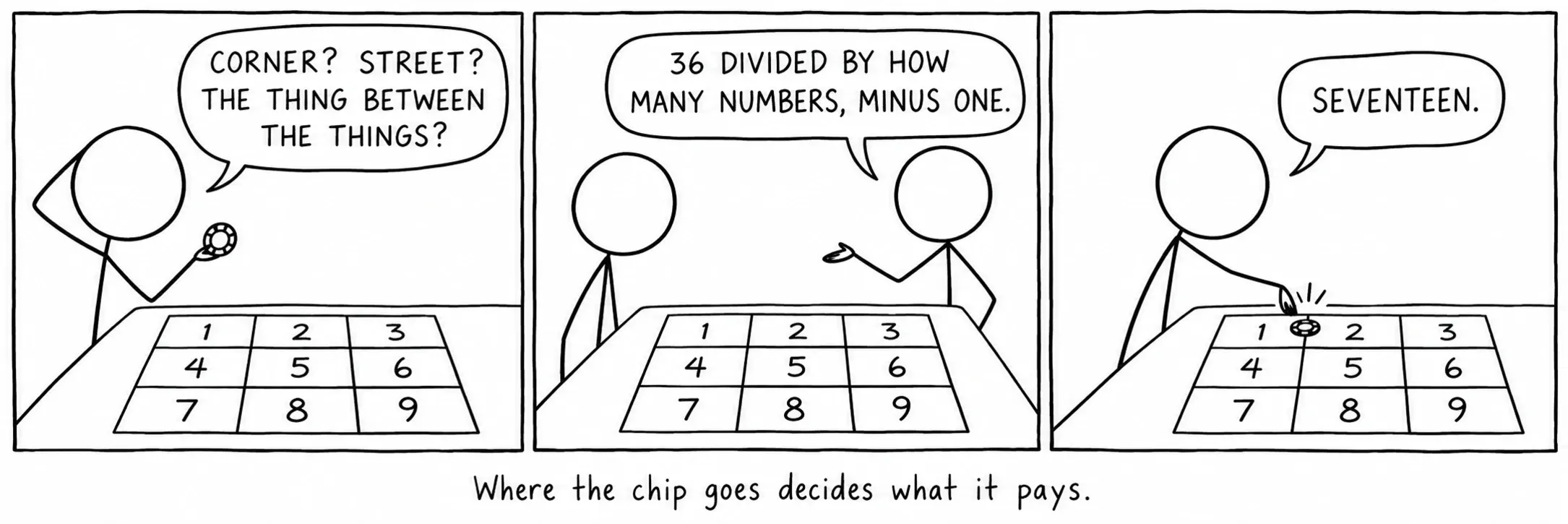
Where the chip goes decides what it pays.
Sources
- Ethier, S. N. The Doctrine of Chances: Probabilistic Aspects of Gambling.