Walkthrough: Betting a Sector
“Seventeen and the neighbors”, five chips at a time, for an hour. What a wheel-sector session feels like and costs.
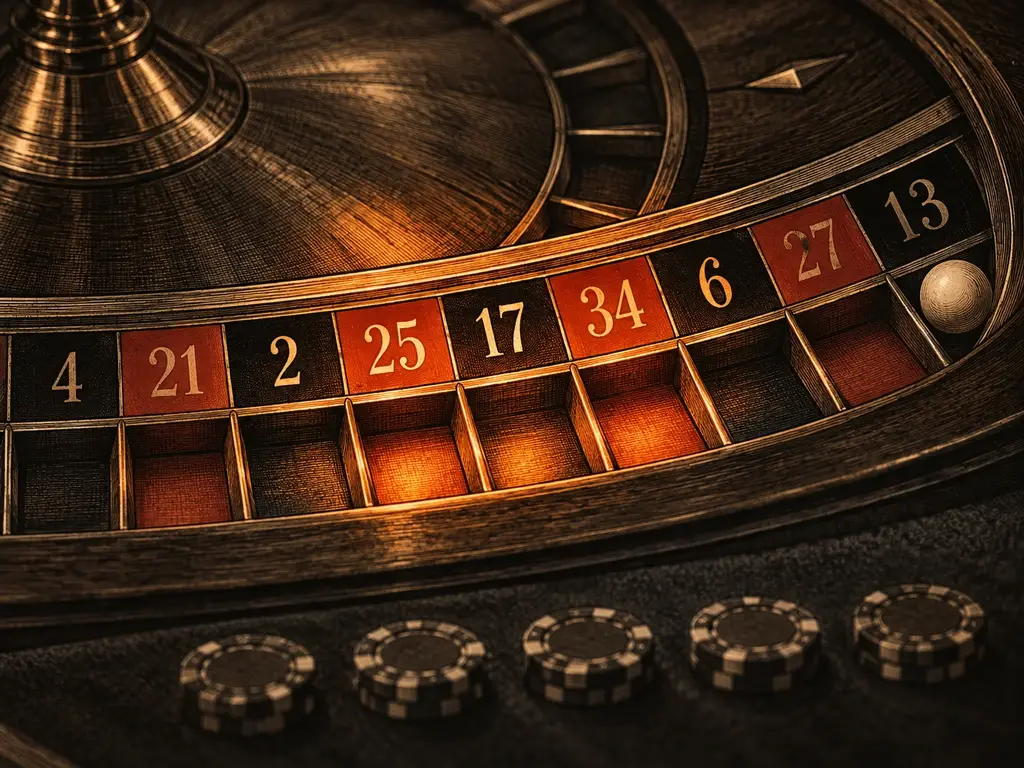
A simulated 50-spin session of five $2 chips on 2-25-17-34-6, the five-pocket arc around 17. Seven hits in 50 spins, net +$4 after being down $120. Five straight ups with a story, and the story changes nothing.
The plan
Announce “seventeen and the neighborsbetNeighborsA number and the two pockets on either side of it on the wheel, five straight-up chips.Read full →” or tap 17 on the racetracktableRacetrackThe oval strip on live and electronic layouts showing the numbers in wheel order, used to place neighbors and sector bets in one tap.Read full →: $2 each on 2, 25, 17, 34 and 6, the five contiguous pocketsequipmentPocketOne of the 37 numbered compartments on the rotor. Also: slot, cup.Read full → around 17 on the wheel. $10 a spin. A hit pays 35 × $2 = $70 on one chipmoneyChipA token representing a fixed amount, placed on the layout to make a bet. Also: check.Read full → and loses the other four: +$62. A miss loses $10. ProbabilitymathProbabilityChance of an outcome, from 0 to 1 or 0% to 100%. One number: 1/37 = 2.70%.Read full → of a hit 5/37 = 13.51%: about one spin in 7.4. Expected result over 50 spins: −$13.51.
Spins 1–15
Miss, miss, miss, miss, miss, miss, miss, miss, miss, miss, miss, miss, hit (34), miss, miss. One hit in fifteen; down $120 at spin 12, then +$62 at spin 13, down $78 after fifteen. The probability of twelve straight misses from the start is (32/37)¹² ≈ 17%. It is the sectorwheelSectorA contiguous arc of pockets on the wheel, as distinct from a group on the layout.Read full → bettor’s normal weather.
Spins 16–50
Three hits in the second block, two in the third, one in the last five. Seven hits in fifty spins, against an expectation of 6.76: a perfectly average hit rate, and a result of +$4 that owes everything to the hits arriving in a convenient order. Had the last hit come one spin later we would have left at −$68. Had 17 hit once more, +$76. The variancemathVarianceA measure of how widely results spread around the expected value. High for straight up, low for even-money bets.Read full → on a 13.5% bet over 50 spins is large relative to the $13.51 expected lossmathExpected lossExpected value times total amount wagered; the average amount lost over a session or a period.Read full →: the standard deviationmathStandard deviationSquare root of variance; the typical distance of a result from the expected value.Read full → of the result is about $175.
- p10 −$300
- p25 −$300
- median −$300
- p75 −$300
- p90 +$760
Why the sector
Because it is a physical arc of the wheel, which matters if and only if the wheel is biased toward that arc, and we have no evidence of that. Without bias the sector bet is five unrelated straight upsbetStraight upA single number, pays 35:1.Read full →: same edge, same payoutmoneyPayoutWhat a winning bet returns, quoted as “X to 1” on top of the returned stake.Read full →, same odds as 2, 25, 17, 34 and 6 chosen because they were someone’s birthdays. The racetrack makes it fast to place and gives the evening a narrative. The arithmetic does not read narratives.
What a bias player would have done differently
Recorded thousands of spins from this specific wheel first, found a sector hitting above 5/37 across two independent samples, and bet it with a stake sized to the measured edge. Our seven hits in fifty spins are not evidence of anything; the Lab’s sample-size page says we would need a hundred times as many spins to say whether this arc is warm. We bet it because 17 is a nice number, which is the same reason everyone does.
Questions
Identical unless the wheel is biased toward that arc, which takes thousands of spins to know.
A $10 table with a five-chip call bettableCall betA bet announced to the dealer rather than placed by hand, usually a wheel-sector bet such as voisins or tiers. Also “announced bet”.Read full →. The inside minimum applies to the total.
“By 3” places seven chips covering seven pockets at 18.9%. Same edge, smoother ride.
Comic relief
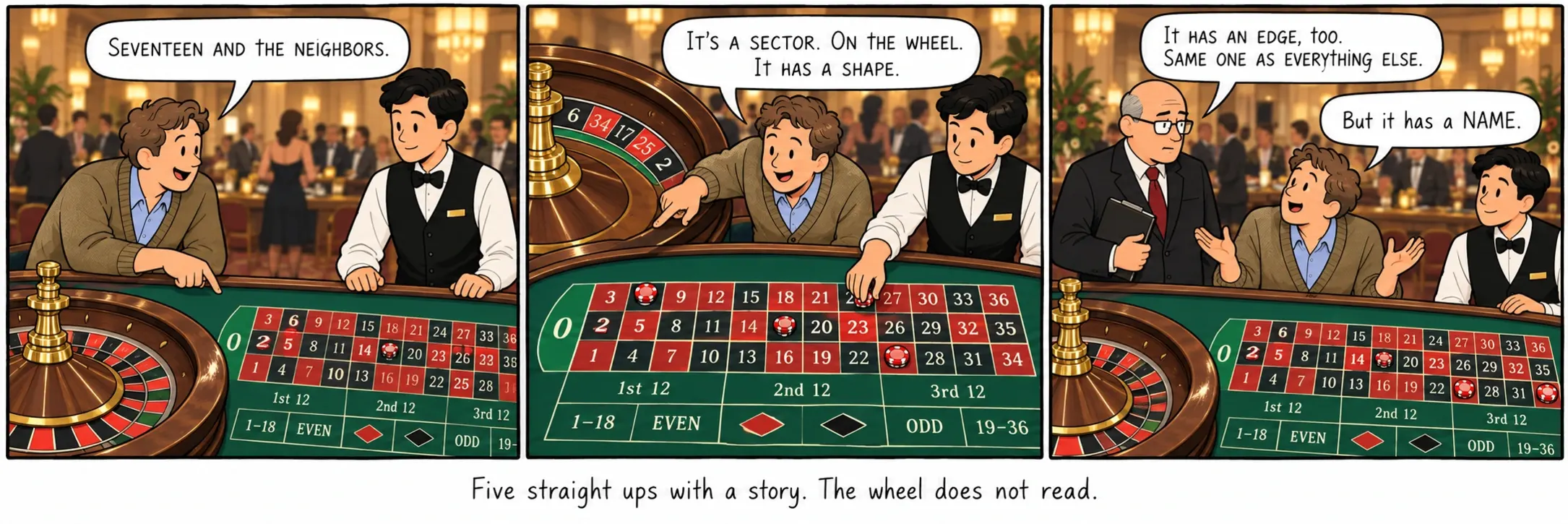
Five straight ups with a story. The wheel does not read.
Sources
- Barnhart, R. T. Beating the Wheel.
- Ethier, S. N. The Doctrine of Chances: Probabilistic Aspects of Gambling.