Richard Jarecki: The Roulette System
A doctor who studied roulette wheels and told reporters a different story about his method.
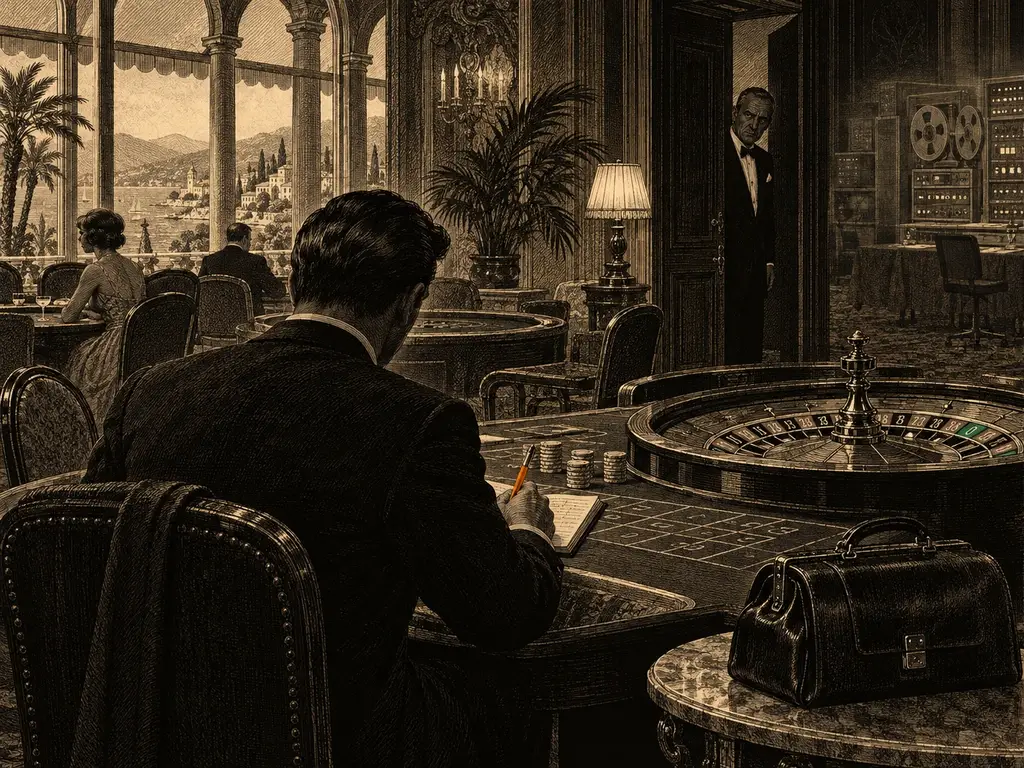
Richard Jarecki (1931–2018), a German-born American doctor, studied roulette wheels in European casinos in the 1960s and early 1970s. His 2018 obituary reports winnings above $1.2 million and describes his computer explanation as a cover for observation. That reported total is not an independently audited profit.
A doctor from Stettin
Richard Wilhelm Jarecki was born on 1 December 1931 in Stettin, then in Germany and now Szczecin in Poland. His father was a dermatologist and his mother’s family owned a shipping company. The family was Jewish and left Germany in the late 1930s. He grew up in Asbury Park, New Jersey, studied at Duke University, and went back to Germany for his medical degree, which he took at Heidelberg in 1958. He married Carol Fuhse, a nurse trained in anesthesia, in 1964. In 1967 the couple moved to Germany. His 2018 obituary describes him as a medical researcher studying electrophoresis at Heidelberg; contemporary reports also called him a professor.
The method
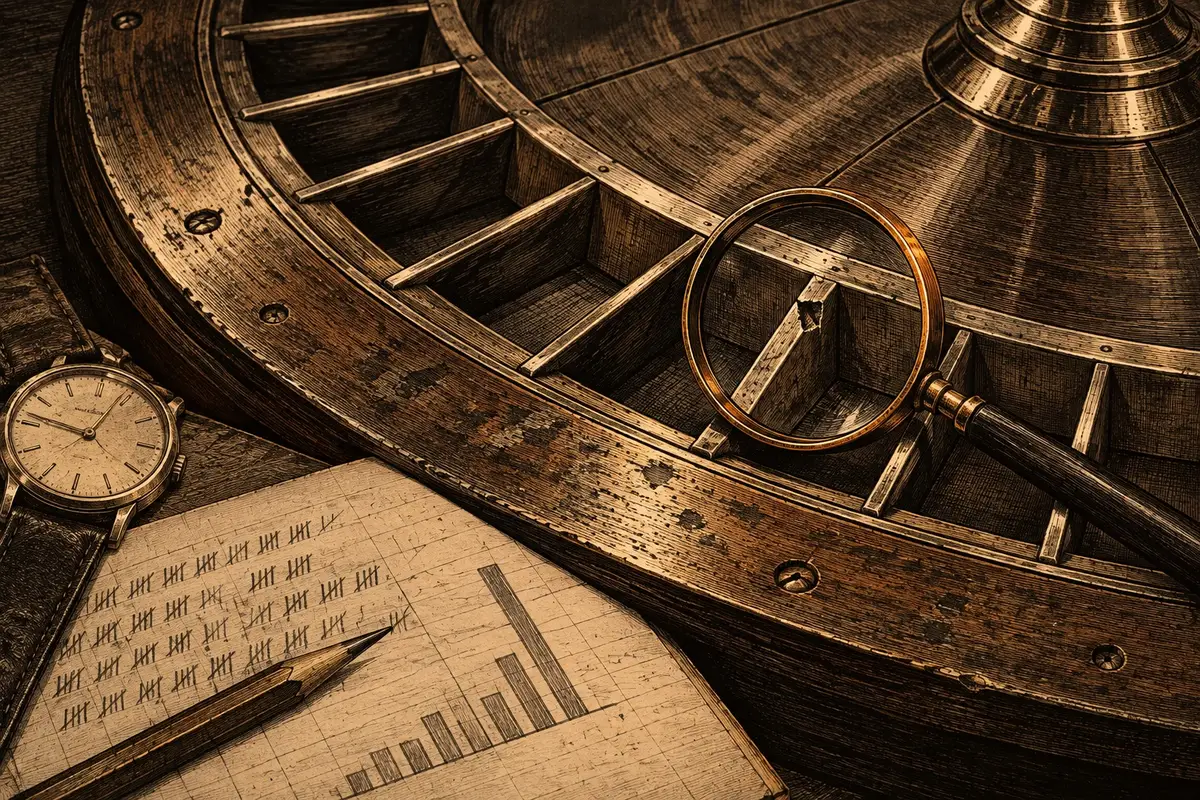
The account of the Richard Jarecki roulette system comes from Carol Jarecki’s 2018 account. The two of them and a handful of helpers wrote down the result of every spin of a chosen wheel, looking for numbers that won more often than they should because of a small fault of manufacture or wear. One wheel could take more than 10,000 spins and as long as a month, and some wheels showed nothing worth betting. She did not claim it as new: “It isn’t something he invented. It’s something he perfected.”
They played in dozens of casinos, among them Monte Carlo, Divonne-les-Bains, Baden-Baden and Sanremo, where he became a regular. The single-zerowheelZeroThe 0 outcome, conventionally shown in green. Ordinary color, parity, high/low, dozen and column bets do not include it.Read full definition → wheels described in these accounts have 37 pocketsequipmentPocketA compartment on the rotor in which the ball can settle. The number of pockets depends on the wheel.Read full definition →, compared with 38 on a double-zero wheel.
The 2018 obituary also reports that moving wheels between tables did not stop him: he recognized individual wheels by their nicks, scratches and other marks.
Why ten thousand spins
In 10,000 independent spinsmathIndependent spinsSpins for which learning an earlier outcome does not change the probabilities assigned to a later one.Read full definition → of a uniform single-zero wheel, one number chosen in advance has an expected count of about 270 and a standard deviationmathStandard deviationThe square root of variance: a measure of dispersion in the same units as the result.Read full definition → of about 16. Seeing it 319 times is roughly three standard deviations above that expectation.
That is a reason to investigate, not proof of a profitable fault. Choosing the highest count after looking at all 37 pockets changes the test. The observed rate, 319/10,000, implies an estimated return of +14.84% at 35 to 1, but the true rate is unknown and the effect might not persist.
The table shows illustrative counts and the returns calculated from them. It is not a table of proven advantages or detection thresholds. More data can help estimate a stable effect; a fixed month of counting cannot guarantee success. See Sample Size for the assumptions a detection plan needs.
| spins recorded | uniform mean and standard deviation | illustrative observed count | return estimated from that count |
|---|---|---|---|
| 1,000 | 27.03; SD 5.13 | 42 | +51.20% |
| 5,000 | 135.14; SD 11.47 | 170 | +22.40% |
| 10,000 | 270.27; SD 16.22 | 319 | +14.84% |
| 20,000 | 540.54; SD 22.93 | 609 | +9.62% |
What is not known
An Associated Press report published on 9 February 1969 says Jarecki often bet on 33 or combinations that included it. That observation does not establish his complete betting rules, stake sizes or true advantage. It also does not verify the mechanical explanation for any particular wheel. The distinction matters: a report of where he placed chipsmoneyChipA token used to place a wager, with a printed or assigned value. Also called a check in some casino terminology.Read full definition → is not a measurement of the probabilities he faced.
The computer story
In his 2018 obituary, Daniel Slotnik reports that Jarecki attributed his success to a University of London computer. Slotnik instead describes painstaking observation without electronic assistance, drawing on Carol Jarecki’s account and quoting Russell Barnhart. This distinction matters: measuring a wheel’s outcomes is different from using a computer to predict an individual spin.
Sanremo, winter 1969
Contemporary reports describe exclusions and readmission at Sanremo in January and February 1969. The timeline gives the dates and explanations reported by the news agencies; it is not a complete record of every later dispute.
UPI reports that he was barred from playing. The stated reason was the disruption caused by crowds gathering at his table.
An AP report dated 8 February says the council barred him three days earlier, describing him as a professional gambler.
His lawyers argue that a professor of forensic medicine can hardly be a professional gambler. The council lifts the ban and promises him an honor card with free entry.
He returns to the United States.
Why the accounts need attribution
Contemporary news reports and later recollections describe different parts of the story. A report of an entry ban can establish what officials announced without proving why Jarecki won. Likewise, a participant’s explanation can illuminate a method without supplying a complete record of its results.
How much he won
The available reports use different periods and measures. A sum won during one run, losses reported alongside it and a lifetime total cannot simply be added together.
| figure | covers | who said it |
|---|---|---|
| 70 million lire won, after about 60 million lost | a few days at Sanremo, January 1969 | press agency report, “reputedly” |
| more than $1.2 million | all casinos | A 2018 obituary says “by many accounts”. |
What the casinos changed
Sanremo moved its tables about, which did not stop him. A 2018 obituary reports that it then replaced some two dozen wheels, and that did. It adds that wheels in general came to be made more carefully, with fewer faults to find, and that his advantage faded. The accounts reviewed here do not identify a wheel maker or establish that he caused a wider change in manufacturing.
After roulette
Back in the United States he traded commodity futures on his own account, mostly silver and gold, and went on playing roulette and blackjack in Las Vegas and Atlantic City. About 1998 he moved to Manila, whose casinos he preferred. He died there on 25 July 2018, aged 86. By his wife’s account he had last played the previous December, in a tournament in Manila, and came first.
Questions
His 2018 obituary reports that the computer explanation was a cover story and describes observation without electronic assistance. That is the source of the distinction made here.
Contemporary UPI and AP reports document exclusions and readmission at Sanremo in early 1969. They do not establish a complete history of restrictions at every casino he visited.
More than $1.2 million is a widely reported total. The sources discussed here do not establish an independently audited figure.
Comic relief
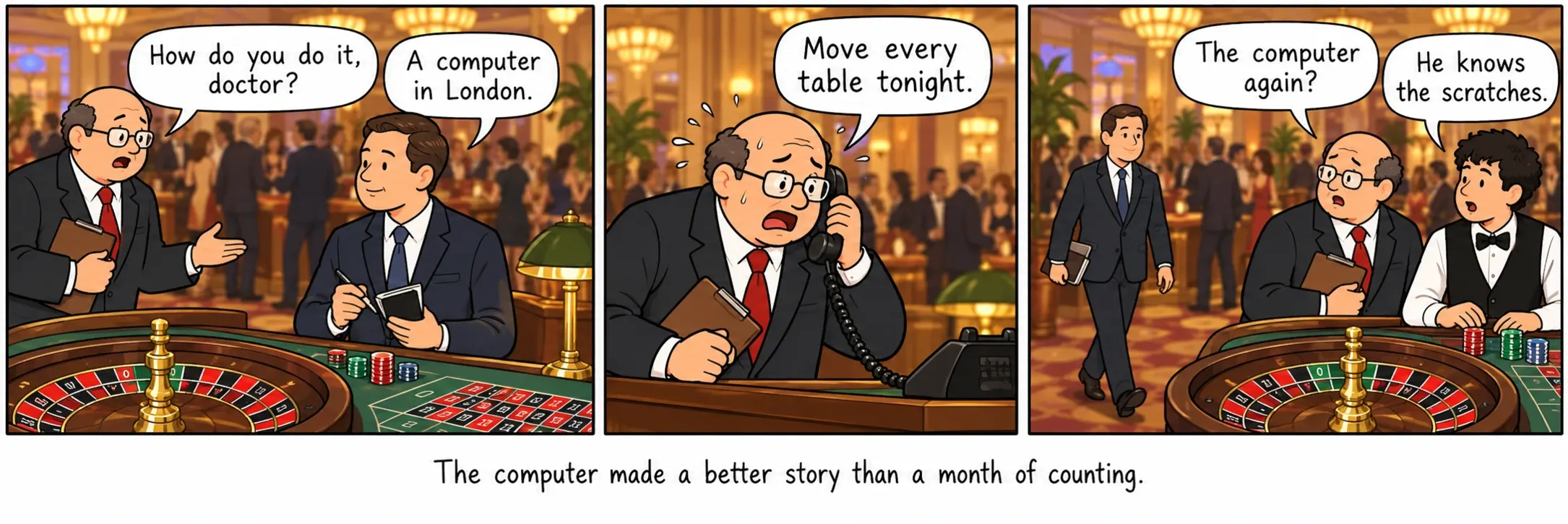
A dramatization of the accounts—not a transcript.
Sources
- Slotnik, D. E. “Richard Jarecki, Doctor Who Conquered Roulette, Dies at 86.”
- McClain, D. L. “Carol Jarecki, Respected Chess Referee, Dies at 86.”
- United Press International. “Casino Conqueror Made to Desist.”
- Associated Press. “Winner Wins Casino Card.”
- Associated Press, “Winner Wins Casino Card”, 9 February 1969 archive
- Daniel E. Slotnik, Richard Jarecki obituary — New York Times report reproduced by WRAL