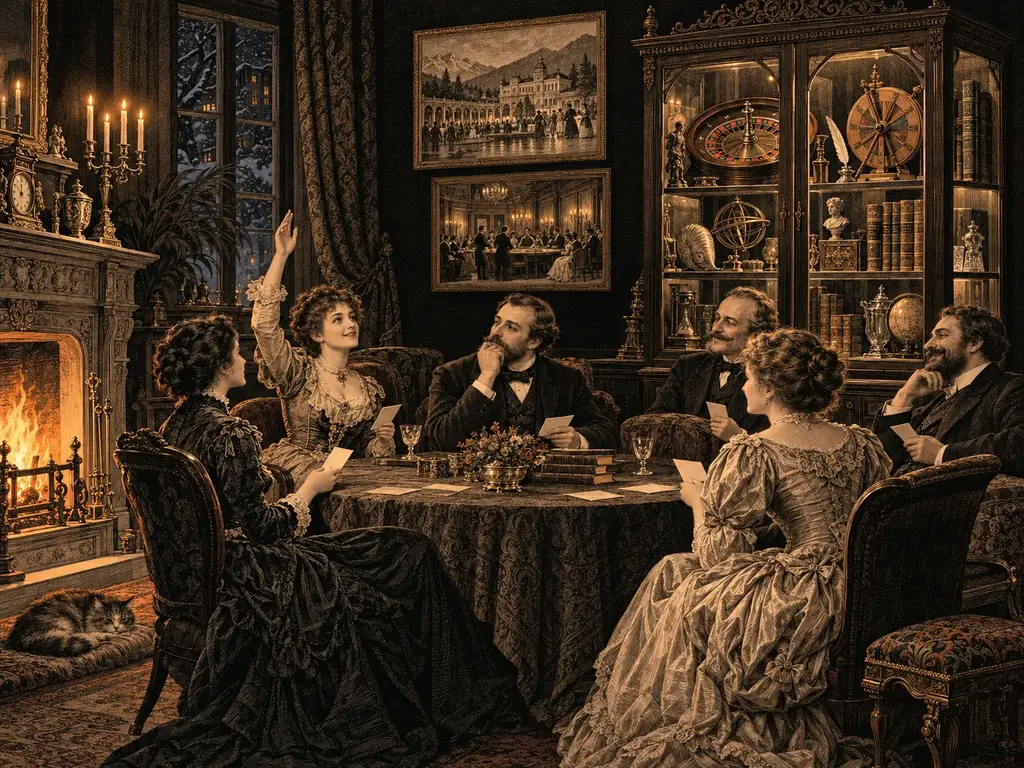
Ten questions on where the wheel came from and who tried to beat it, drawn from a pool of fifteen. Easier than the odds quiz and better at parties.
Short answer
Pascal, Lablée, the Blancs, Jagger, Wells, Pearson, Dostoevsky, Thorp, the Eudaemons, García-Pelayo and the 26 blacksbetBlackEven-money bet on the 18 black numbers. French: noir.Read full →. Multiple choice, shuffled each time, with links to the History and Lab pages for anything you miss.
questions
10 of 15
pass mark
8
hardest
Pearson
easiest
the song
Scoring
10: you have read the History section twice.
8–9: well read.
5–7: you know the stories; the dates are on the timeline page.
Under 5: the Timeline of Roulette page is a ten-minute fix.
The answers, in order of time
1650s
Pascal’s spinning wheel.
1754
D’Alembert’s fallacy in the Encyclopédie.
1796
Paris; Lablée.
1843
Homburg; the Blancs; single zero.
1863
Monte Carlo.
1866
Dostoevsky’s The Gambler.
c. 1880
Jagger.
1891
Wells.
1900
Pearson.
1913
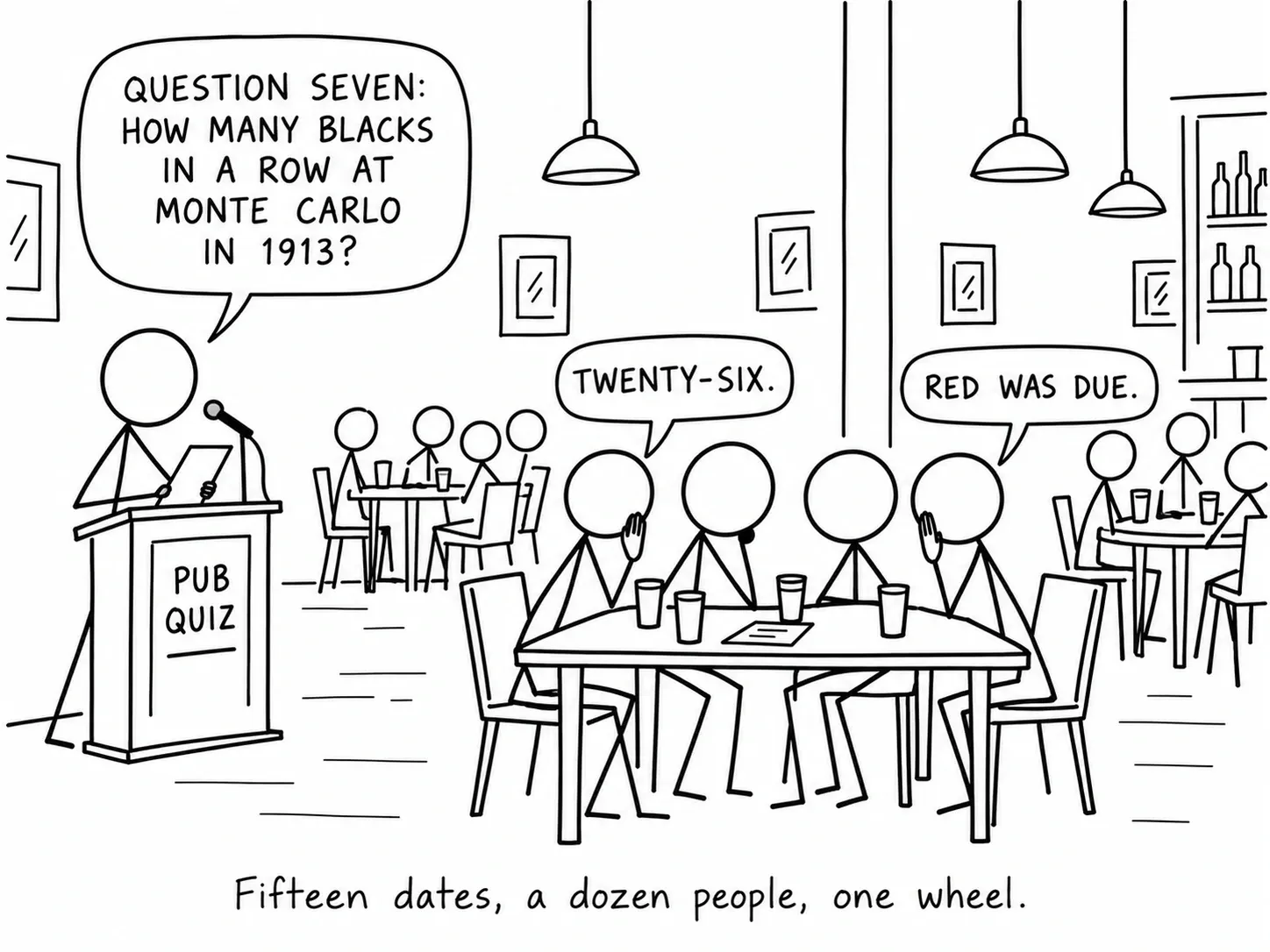
26 blacks.
1961
Thorp and Shannon.
1969
Thorp’s proof: no system wins.
1978
The Eudaemons.
1990s
García-Pelayo.
2016
Triple zero.
Questions
Why no questions about systems?
Because the history of systems is one answer: none worked. See History of Roulette Systems.
Is the Connery 17 story on the quiz?
No. It is on the superstitions page, with the caveat that it is a story.
Comic relief
Fifteen dates, a dozen people, one wheel.
Sources
Schwartz, D. G. Roll the Bones: The History of Gambling.Gotham, 2006.
Kavanagh, T. M. Dice, Cards, Wheels: A Different History of French Culture.University of Pennsylvania Press, 2005.