Gonzalo García-Pelayo: The Roulette System
A record producer, a family of note-takers, and a court dispute over studying roulette wheels.
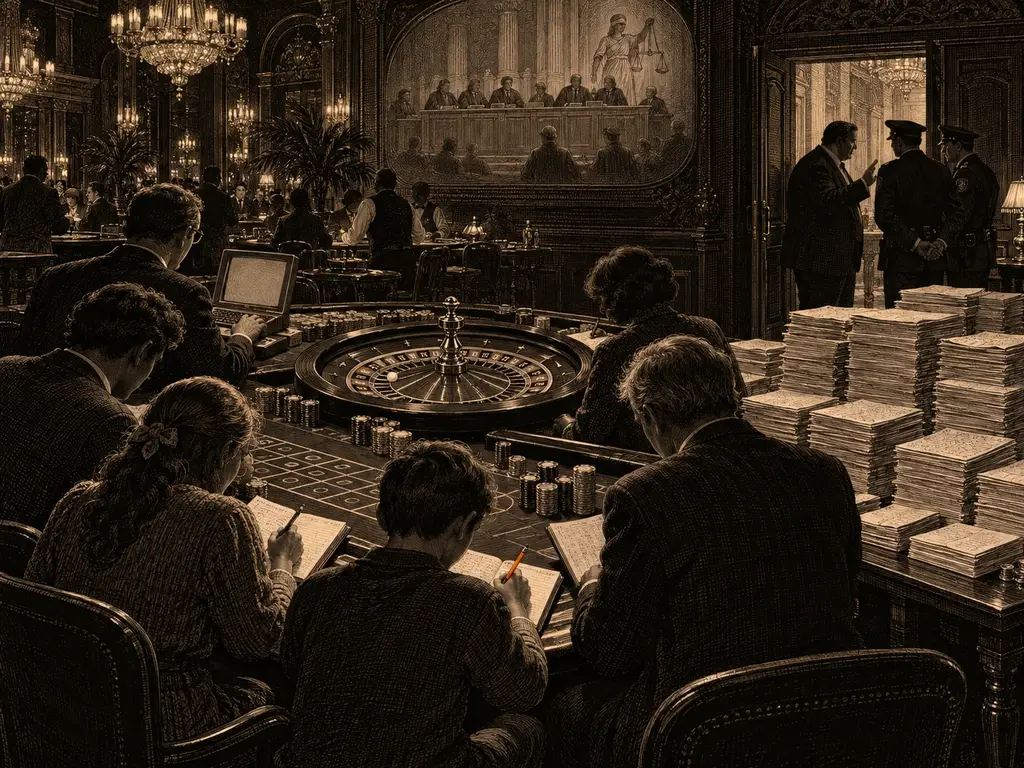
Gonzalo García-Pelayo, a Spanish record producer and film director, led a family team that studied roulette wheels in the early 1990s. He describes recording about 5,000 spins per wheel before choosing pockets to bet on. The winnings remain reported claims. In 2004, Spain’s Supreme Court rejected Casino Gran Madrid’s appeal over the lifting of an entry ban.
Before the casino
Gonzalo García-Pelayo was born in Madrid on 25 June 1947. He directed films including Manuela and Vivir en Sevilla. A biography reproduced on his website dates his Gong record label to 1974 and credits him with producing about 150 records, including work with María Jiménez and Luis Eduardo Aute. In a 2004 Cinco Días interview, he described his mathematics background as school-level study and some reading on probabilitymathProbabilityA measure of how likely an event is, from zero to one. Percentages express the same scale from 0% to 100%.Read full definition →.
The team
García-Pelayo describes a family team, with his son Iván and nephew Jaime organizing play across several casinos. In his account, one group recorded results and then left; different people arrived to place bets, making the connection less obvious to casino staff.
In a 2004 interview, he also described using friends whom the casinos did not recognize. These are participants’ accounts of how the work was organized, not a verified roster or a guarantee that the approach would succeed.

The method, in his words
García-Pelayo says he began with the idea that manufacturing differences could affect a wheel’s results. In his 2024 interview, he describes turning from the dealer’s throw to the wheel itself. A physical imperfection does not, by itself, establish a bias large enough to overcome the payoutmoneyPayoutThe amount paid on a winning wager. Check whether the quoted figure is net profit or total return including the stake.Read full definition → disadvantage.
In his later interviews, he describes recording about 5,000 results per wheel over roughly fifteen days of long shifts. This is his account of the team’s sampling effort, not a guarantee that 5,000 observations will reveal a profitable bias.
He counts in “positives”. A number that comes up once in 36 spins breaks even at 35 to 1, so it scores nothing; every hit beyond that is one positive. He then compares a wheel’s positives with what fair wheels produce in a computer simulation, using a program he wrote himself. As a reviewer of the family’s book reports it, there are two limits: one that 95% of simulated fair wheels stay under, and a higher limit that 99.95% stay under. He treats the higher limit as strong evidence of bias. A simulated threshold still depends on the model and test procedure; it cannot make a conclusion certain.
By his figures a biased wheellabBiased wheelA wheel whose outcomes do not have equal probabilities. The cause and strength of any bias require investigation.Read full definition → had between nine and twelve numbers running ahead. The best pocketequipmentPocketA compartment on the rotor in which the ball can settle. The number of pockets depends on the wheel.Read full definition → he ever found won once in 28 spins, anything better than once in 35 was worth a bet, and the mix gave an advantage of about 6%. These are his reported figures, not independently verified estimates supplied by a casino or regulator.
| assumed average spins per hit | expected return at 35:1 | connection to his account |
|---|---|---|
| 42 spins | −14.3% | the worst pocket he found |
| 37 spins | −2.70% | a fair pocket |
| 36 spins | 0% | break-even: no positives |
| 35 spins | +2.9% | worth betting |
| 28 spins | +28.6% | the best pocket he found |
Why 5,000 spins, and why the whole wheel
For one pocket on a uniform independent single-zerowheelZeroThe 0 outcome, conventionally shown in green. Ordinary color, parity, high/low, dozen and column bets do not include it.Read full definition → wheel, 5,000 spins give an expected count of 135.14 with a standard deviationmathStandard deviationThe square root of variance: a measure of dispersion in the same units as the result.Read full definition → of 11.47. If its true probability were 1/28, its expected count would instead be 178.57—but an actual sample would fluctuate around that value. Neither a large observed count nor a small p-valuelabp-valueUnder a specified null model, the probability of a test statistic at least as extreme as the observed one, using the chosen test.Read full definition → proves a fault with certainty.
A true probability of 1/33 would give an expected count of 151.52 and an expected net return of about +9.09% at 35 to 1. That expected count is only about 1.43 standard deviations above the uniform mean, so it can be difficult to distinguish the two models from this sample alone.
Inspecting all 37 pockets creates a selection problem: even a uniform wheel has a highest count. A valid analysis must account for which pockets or groups were tested and selected. A whole-wheel chi-square testlabChi-square testA test comparing observed category counts with those expected under a specified model, such as equal pocket probabilities.Read full definition → can assess departure from uniformity, but does not by itself identify a profitable pocket or prove that the pattern will continue.
The money
The winnings are reported claims, not audited results. In a 2004 Cinco Días interview, García-Pelayo put the total at €1.2 million, with about €1,800 to start and a loss of €60,000 on one day. Those figures describe his account of the experience, not independently verified profits.
In his 2024 La Nación interview, he recalled playing in Barcelona and Austria and making two trips to Las Vegas, one for roulette and one for poker. He said the Las Vegas trips covered their costs. That recollection does not establish the effect of the second zero.
At a 35:1 payout, a straight-up bet breaks even at a true hit probability of 1/36 on either wheel. Compared with a uniform baseline, that requires a relative increase of 2.78% above 1/37 on single-zero roulette, or 5.56% above 1/38 on double-zero roulette. Profit requires a probability above that threshold; sample results alone do not establish it.
What the casino did
Casino Gran Madrid, in Torrelodones, barred the players in 1994. A contemporary El País report describes the casino’s argument: the group collected results, analyzed them with computers and used that information to choose bets. Other players then followed their selections. The casino argued that this amounted to an irregularity under the casino regulations.
The dispute was therefore about whether studying results justified an entry ban. The court record distinguishes observation and analysis from manipulating the wheel or changing bets after the permitted time.
Ten years in court
The casino challenged an administrative decision lifting the entry ban. The Supreme Court’s 2004 judgment notes a procedural complication involving provisional relief, then addresses the substance of the players’ conduct.
The family begins recording wheels at Casino Gran Madrid.
García-Pelayo later recalls splitting the team between Madrid and Barcelona during the Olympics.
The casino bars six of them.
The government provisionally lifts the entry ban while the administrative case proceeds; the casino challenges the decision.
The High Court of Justice of Madrid dismisses the casino’s challenge.
The Supreme Court rejects the casino’s appeal.
The feature film The Pelayos is released in Spain.
What the Supreme Court said
In its judgment of 11 June 2004, the Supreme Court rejected Casino Gran Madrid’s appeal. It found that the players had observed results and used computing techniques without manipulating the wheel, placing late bets or interfering with the ballequipmentBallThe small ball that settles in a numbered pocket to determine a physical roulette result.Read full definition →. That conduct did not justify this ban under the casino regulation at issue.
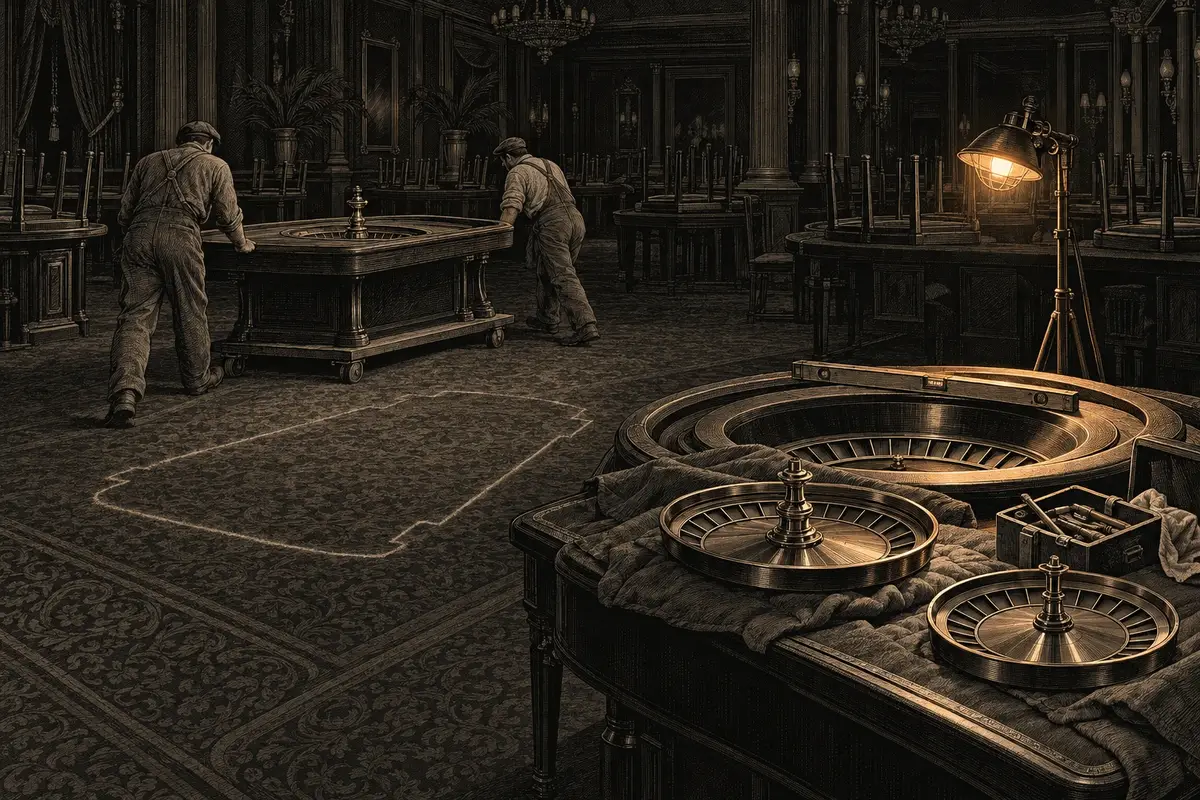
The judgment identified equipment changes as a lawful response. It did not create a worldwide right to play or establish a current rule for every casino. Read the decision as a ruling on this dispute, not general permission to use any prediction technique.
After roulette
In 2004, García-Pelayo told Cinco Días that he was earning his living from online poker and preparing a sports-betting website. With his son Iván, he wrote La fabulosa historia de Los Pelayos (2003). Fundación Formentor’s participant biography identifies that book as the basis for the documentary The Roulette Assault (2004) and the film The Pelayos (2012).
His later work also returned to cinema: the filmography reproduced on his website lists Alegrías de Cádiz in 2012 and further films in the following years. A film or memoir can tell the family’s story without independently verifying its gambling results.
What is not established
Three things often said about the Pelayos are not independently established by the sources reviewed here. He says an English maker built a special wheel against them, an “anti-Pelayo roulette”; this page has no independent confirmation from a maker or casino. The reviewed sources do not establish that casinos across Europe changed their maintenance because of this one family. And the tables of limits in the book could not be checked for this page, so they are described here only as a reviewer described them.
Questions
No. The casino barred them, the government overruled the ban, and the casino took the government to court. It lost in 2000 and again in the Supreme Court in 2004.
The decision rejected this ban under the Spanish regulation at issue. It does not establish a current rule for every venue or jurisdiction.
The historical account does not establish a current advantage. That would require evidence about a particular wheel, fresh results, the payout rules and whether any effect persists.
Comic relief
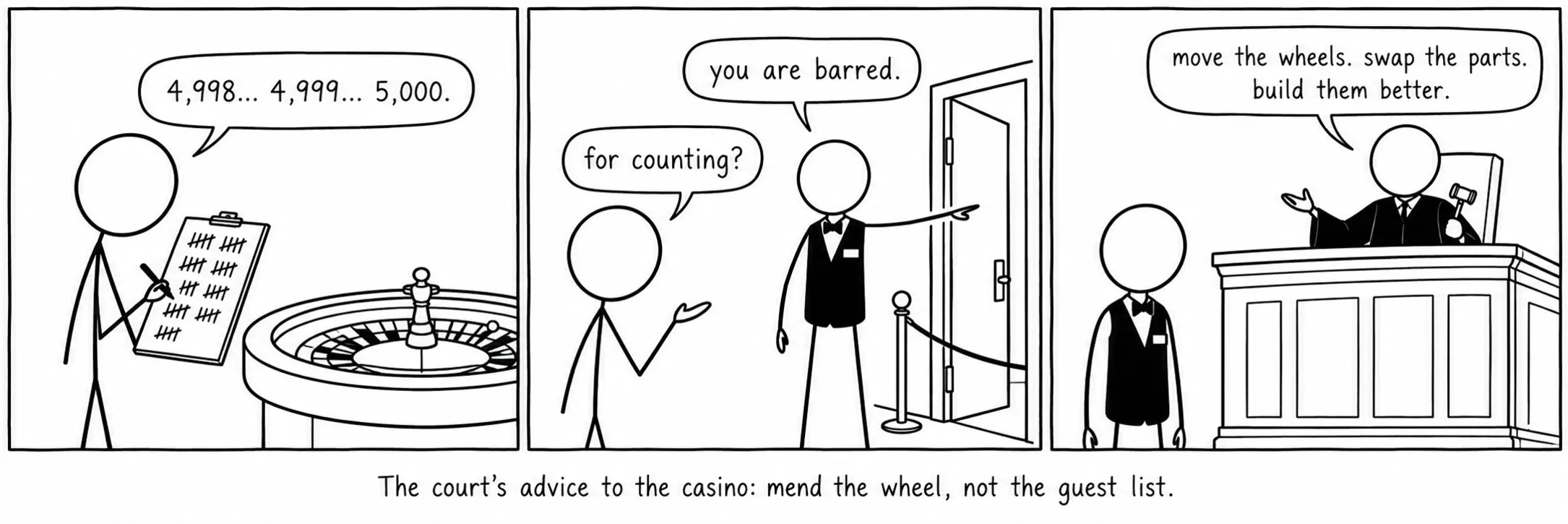
A simplified illustration of the Spanish Supreme Court’s 2004 ruling.
Sources
- Tribunal Supremo, Sala de lo Contencioso-Administrativo.
- Hernández, J. A. “El clan de los Pelayo gana la apuesta.”
- Sampedro, J. “Los ‘tecnotahúres’ vuelven al casino.”
- Cadena SER. “Los Pelayo ya pueden entrar en el Casino de Madrid.”
- Mazo, V. “Pelayos contra el Ibex 35.”
- Semana. “El terror de la ruleta.”
- Solomita, M. “La increíble historia de Gonzalo García-Pelayo, el hombre que venció a la ruleta.”
- Wille, G. “Hicimos saltar la banca.”
- Ibáñez, Á. “La Fabulosa Historia de Los Pelayos.”
- Mazarrasa, L. Feature on poker in Spain.
- García-Pelayo, G. “Análisis de una ruleta.”
- Supreme Court, appeal 4288/2000, 11 June 2004 — judgment reproduced by Iberley
- García-Pelayo, 2024 La Nación interview reproduced on his website
- Conociendo Directores 59: Gonzalo García Pelayo. Biography reproduced on his website.
- Mazo, V. Pelayos contra el Ibex 35. Cinco Días, 1 July 2004.
- Fundación Formentor. Gonzalo García Pelayo, participant biography, 2022.