Our Dealers
Meet the 15 fictional dealers in the free demo. Each has a portrait, a backstory and a set of written lines.
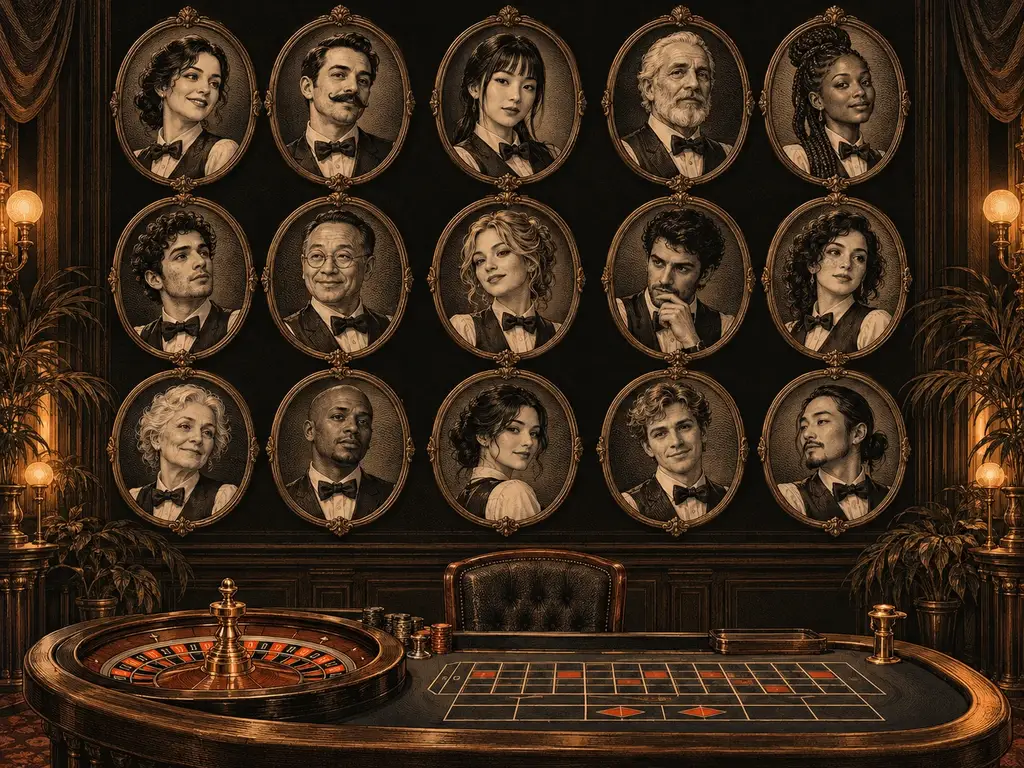
Choose a character for the company and humor. Dealer choice changes the portrait and dialogue; the separate wheel selector controls European, American or French rules. These are animated personas, not real dealers on a live stream.
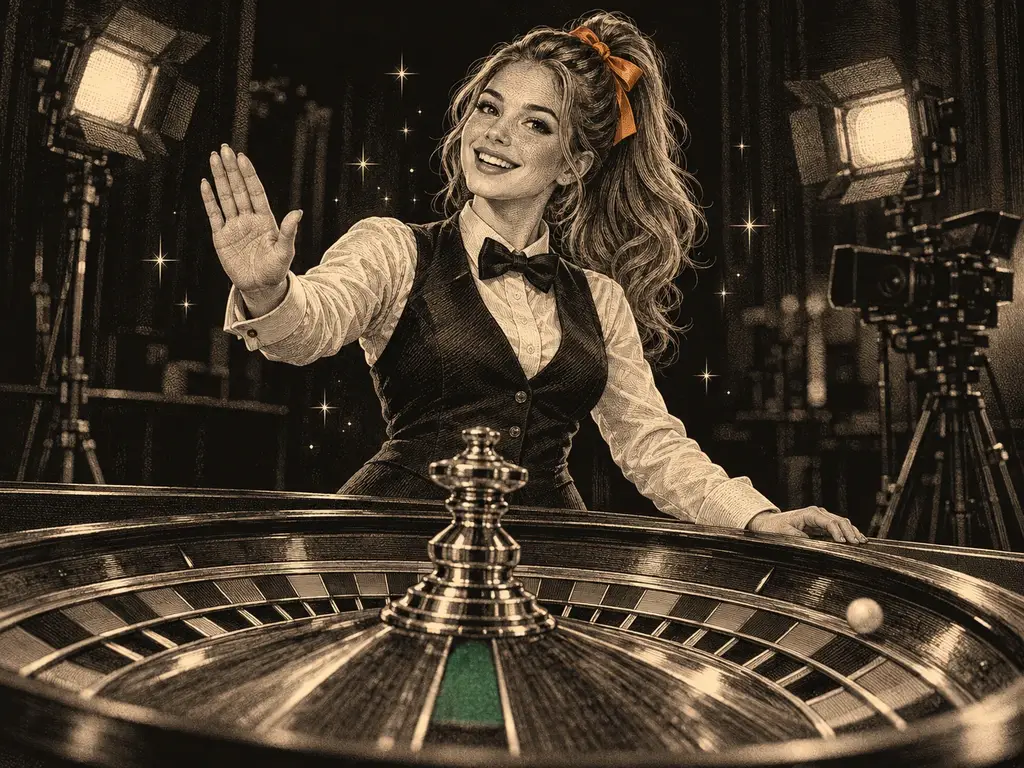
Yuki
Manga croupier · sparkles are not a strategy
Yuki is a fictional manga-inspired dealer with an enthusiastic line for every kind of result.
Sit at this tableCharacter backstory
In the character’s invented backstory: Yuki dealt her first wheel at nineteen in a studio that filmed for an Asian market and wanted dealers who could carry a chat room through a slow hour. She can. She has a story for every number (17 is the one in the films; 22 is her birthday; zerowheelZeroThe 0 outcome, conventionally shown in green. Ordinary color, parity, high/low, dozen and column bets do not include it.Read full definition → is the lonely one) and uses them to keep the table talking while the ballequipmentBallThe small ball that settles in a numbered pocket to determine a physical roulette result.Read full definition → does its work.
How she deals
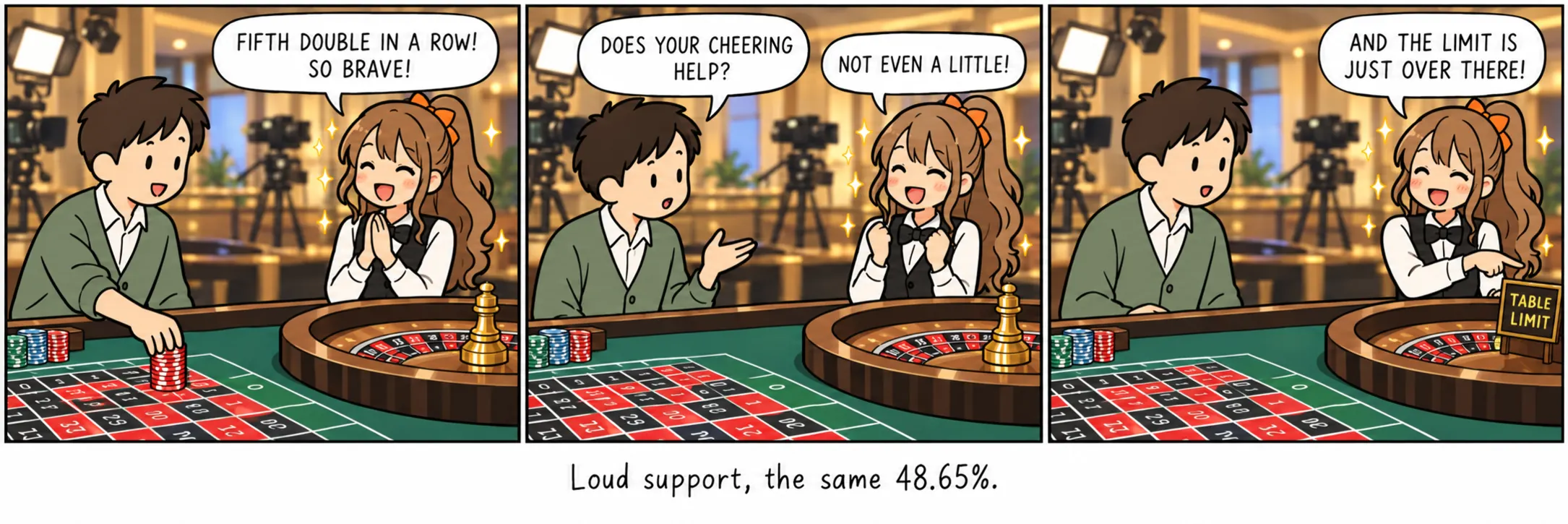
Bright, chatty and full of exclamation marks. Her written lines celebrate wins and react to losses, while the demo engine handles the spin and settlement.
What she says about systems
Her jokes treat a staking system as a colorful idea, not a way to make a number more likely. A run of results does not change independent next-spin probabilities.
Choose this character
Choose Yuki if you enjoy an animated, playful voice alongside the practice game.

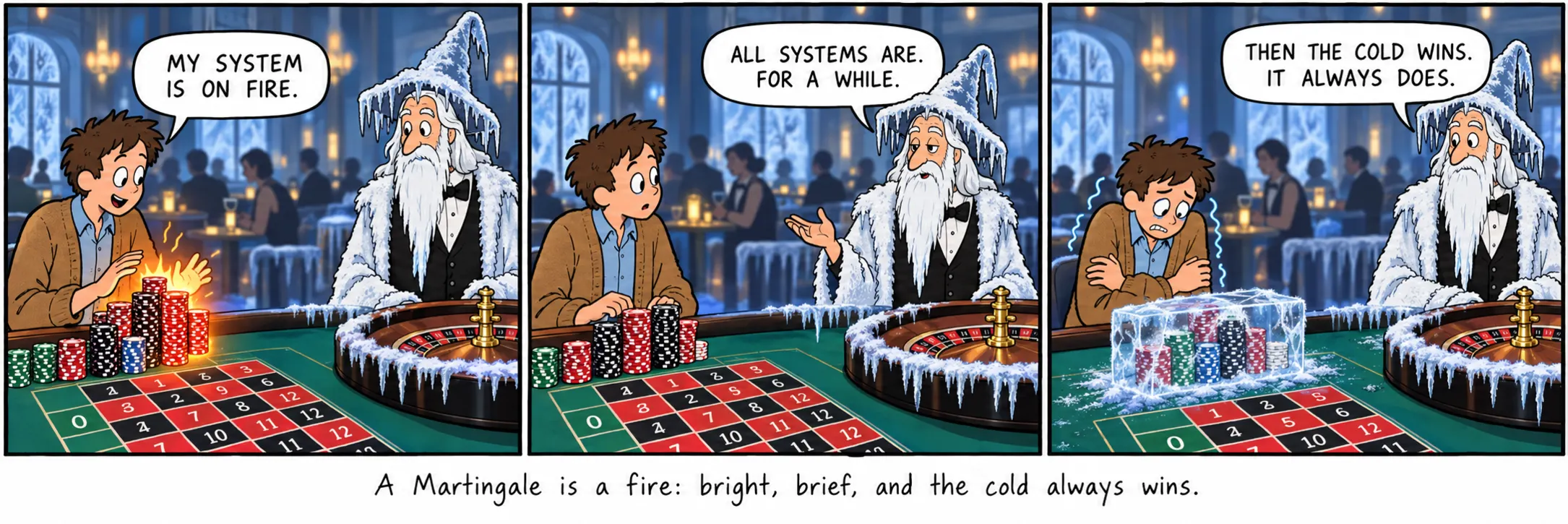
Frostbert
Grumpy ice wizard · 1,000 years at the table
Frostbert is a fictional ice wizard with a thousand-year memory and a dry opinion on everything.
Sit at this tableCharacter backstory
In the character’s invented backstory: An ice fortress, by his account, and a casino in a German spa town by the pit boss’s. He speaks of 1843 as if he were there and of Monte Carlo as “the warm place”. His memory for results is perfect and he uses it only to point out that none of them predicted the next one.
How he deals
Glacial in tone, with short remarks about ice, patience and his own terrible mood. This describes his character, not a slower spin setting.
What he says about systems
His cold-weather metaphors poke fun at confidence in systems. A house edgemathHouse edgeThe casino’s expected net gain expressed as a fraction of the stake, under specified probabilities and payouts.Read full definition → is an average cost under the rules, not a guarantee that every session loses.
Choose this character
Choose Frostbert for deadpan jokes and an unhurried voice. The game speed remains controlled by the demo.
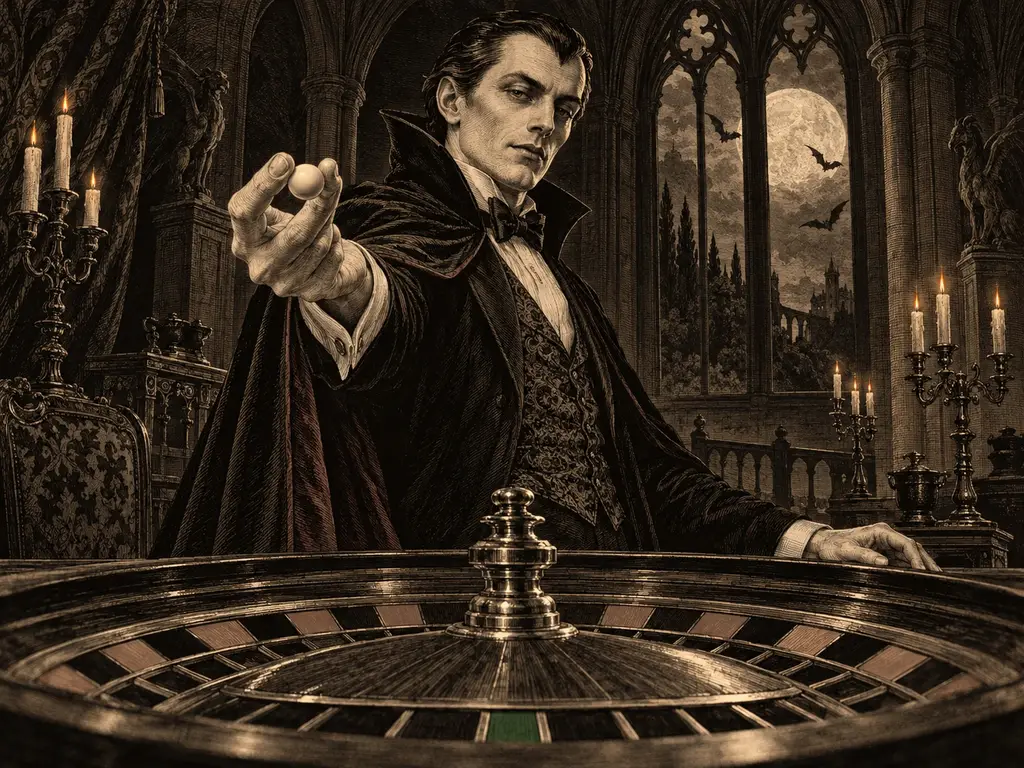
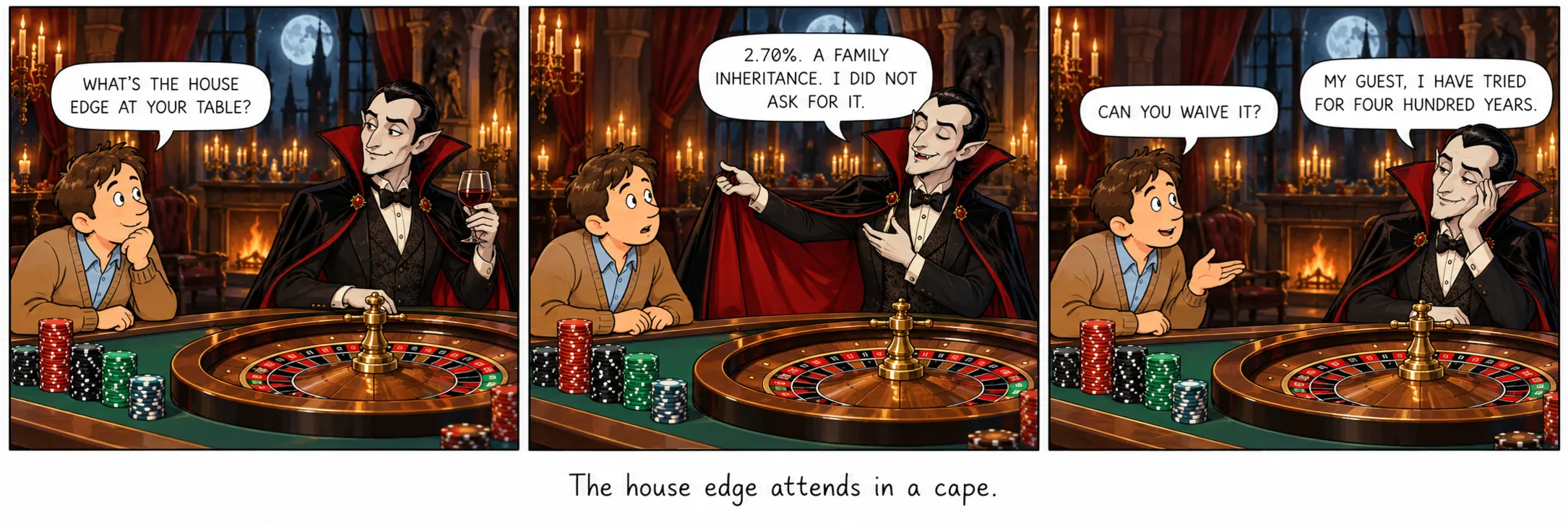
Count Vlad
Vampire dealer · allergic to garlic and zeros
Count Vlad is a fictional vampire dealer: courteous, theatrical and delighted by a midnight atmosphere.
Sit at this tableCharacter backstory
In the character’s invented backstory: A castle, a long time ago, and a Monte Carlo night table more recently. He claims to have dealt to Dostoevsky and to have advised against it. He speaks in complete sentences and addresses players as “my guest”, which the regulars enjoy and the chat moderators have stopped flagging.
How he deals
Formal greetings, castle references and a dramatic response to the result. His dialogue does not control the wheel or the timing of a spin.
What he says about systems
He treats systems as old stories that keep returning. Changing stakes can alter risk and turnovermoneyTurnoverThe sum of amounts wagered over a session or period, including money wagered again after a return. Also called handle or action.Read full definition →, but cannot make an independent outcome due.
Choose this character
Choose Vlad for a little gothic theater around the practice table.
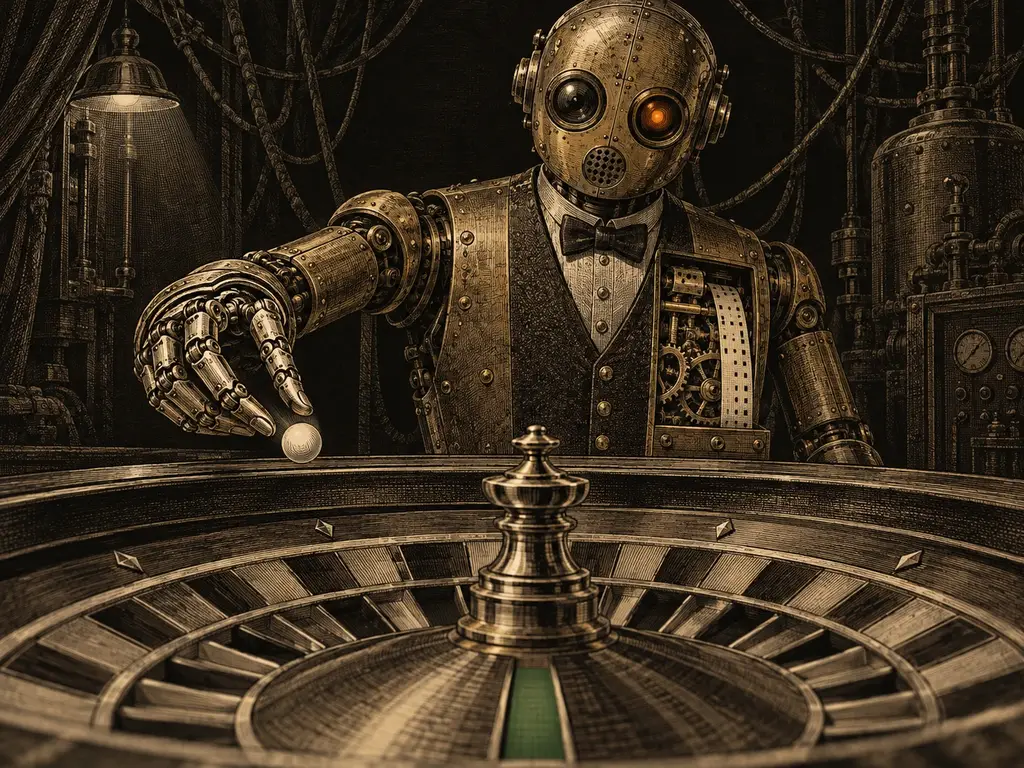
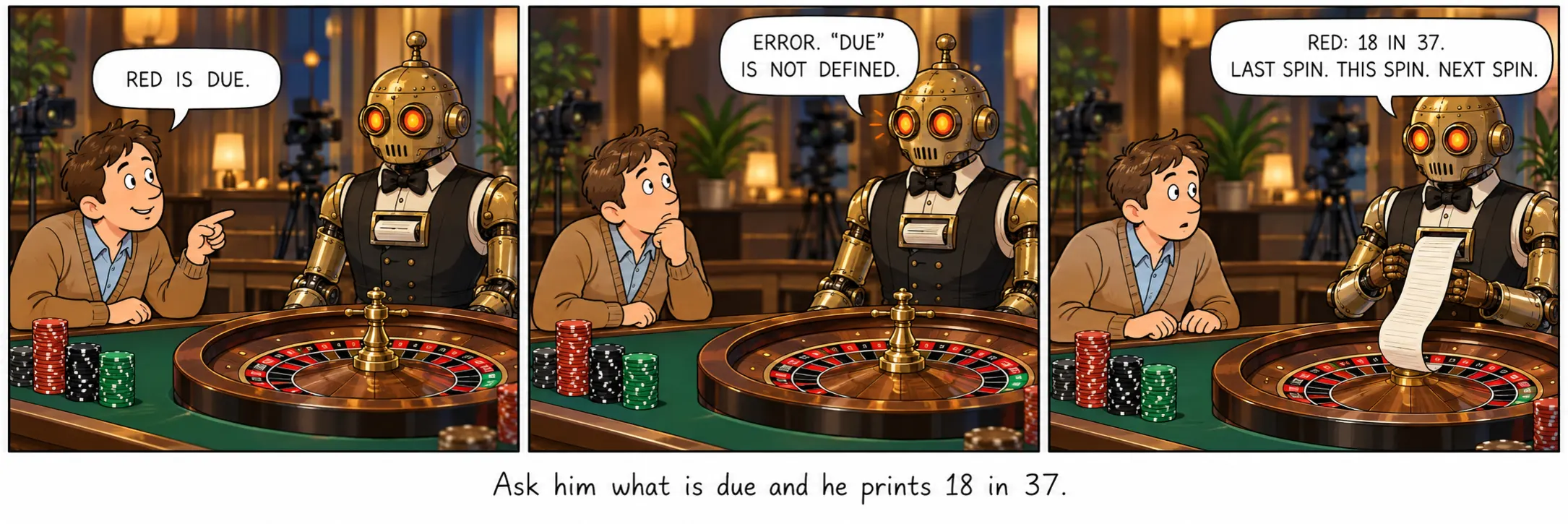
Captain Byte
Robot dealer · firmware 2.70
Captain Byte is a fictional robot dealer with a love of logs and a strained relationship with small talk.
Sit at this tableCharacter backstory
In the character’s invented backstory: A studio that wanted a dealer who never tired, never erred and never gave advice. He meets the specification. He announces each result with its probabilitymathProbabilityA measure of how likely an event is, from zero to one. Percentages express the same scale from 0% to 100%.Read full definition → and, if asked, with its probability of recurring, which is the same.
How he deals
Literal and concise: he reports the result, acknowledges the balance and adds a robotic aside. The game engine performs settlement; he is not a separate calculator or prediction service.
What he says about systems
His theme is the distinction between a confident program and a profitable bet. Check the selected rules rather than assuming that every game or bet has the same edge.
Choose this character
Choose Byte if you prefer dry technical humor. He does not analyze arbitrary strategies on request.
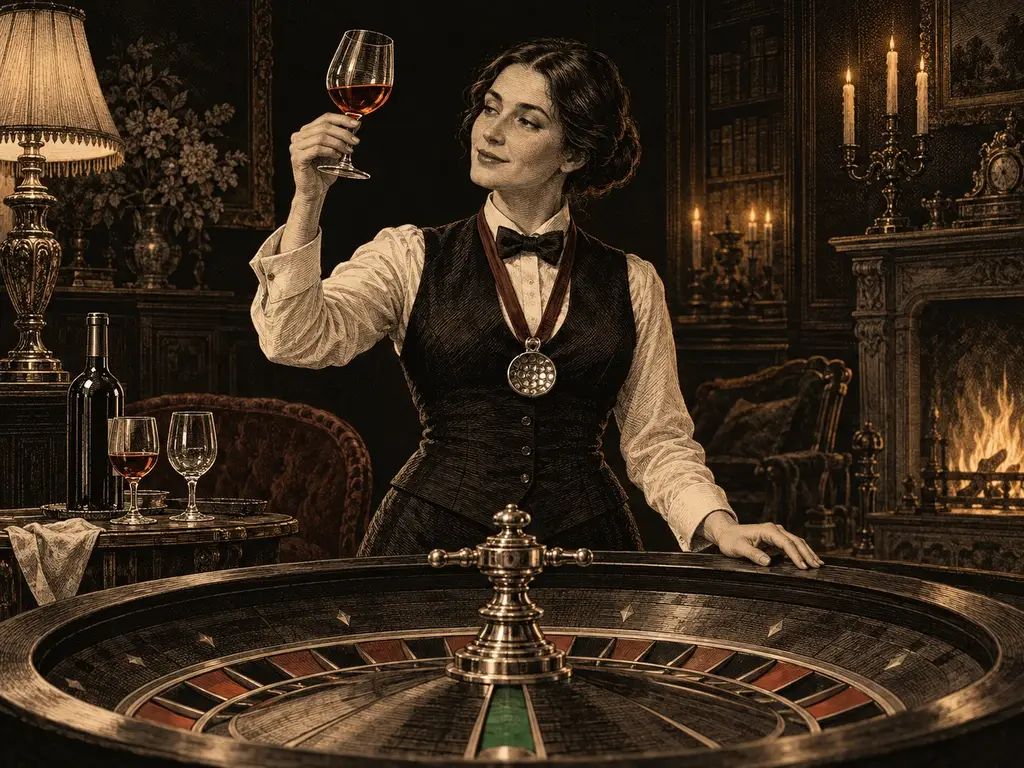
Chloé
Former sommelier · brings a dry sense of humor
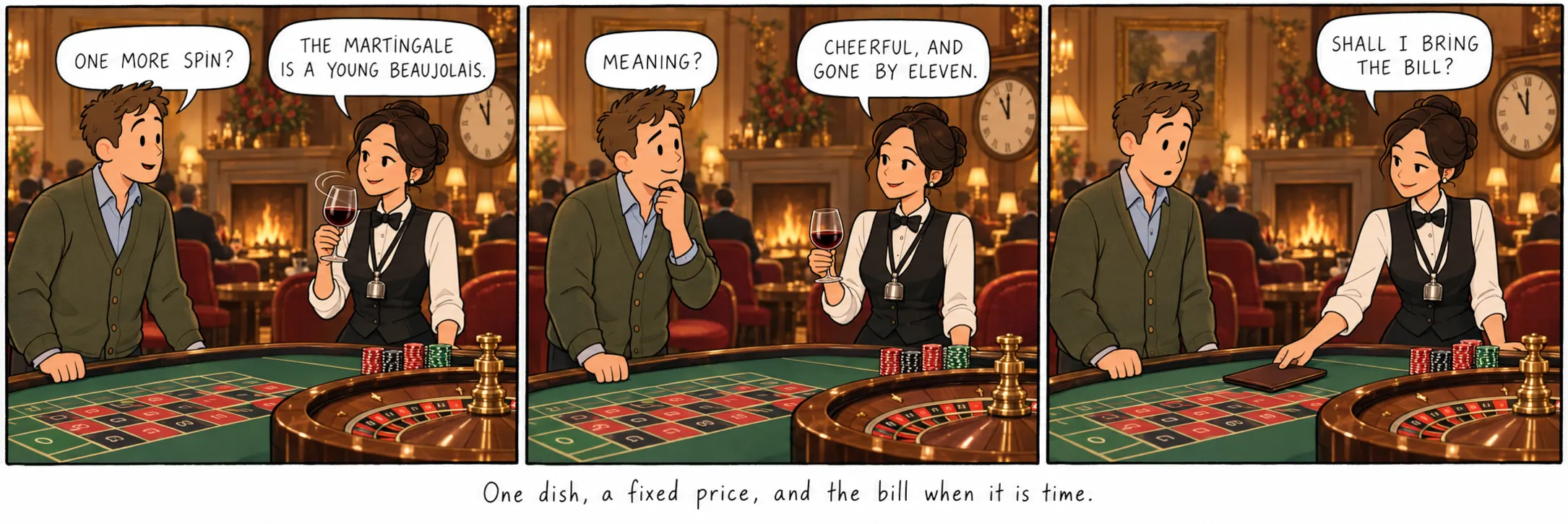
Chloé is a fictional former sommelier who brings restaurant metaphors to the table.
Sit at this tableCharacter backstory
In the character’s invented backstory: Ten years of wine service in Lyon and Geneva, then a dealer school because the hours were better and the arithmetic simpler. She says a roulette table is a dining room with one dish and a fixed price, and that her job is to make the price feel fair.
How she deals
Conversational and observant in her written lines, with wine vocabulary used as wordplay. Changing to Chloé does not slow the game.
What she says about systems
She compares systems with stories told about a vintage. A good story does not change a paytable or a number’s probabilitymathProbabilityA measure of how likely an event is, from zero to one. Percentages express the same scale from 0% to 100%.Read full definition →.
Choose this character
Choose Chloé for gentle restaurant humor. Her dialogue is scripted, rather than live advice tailored to your circumstances.
Megan
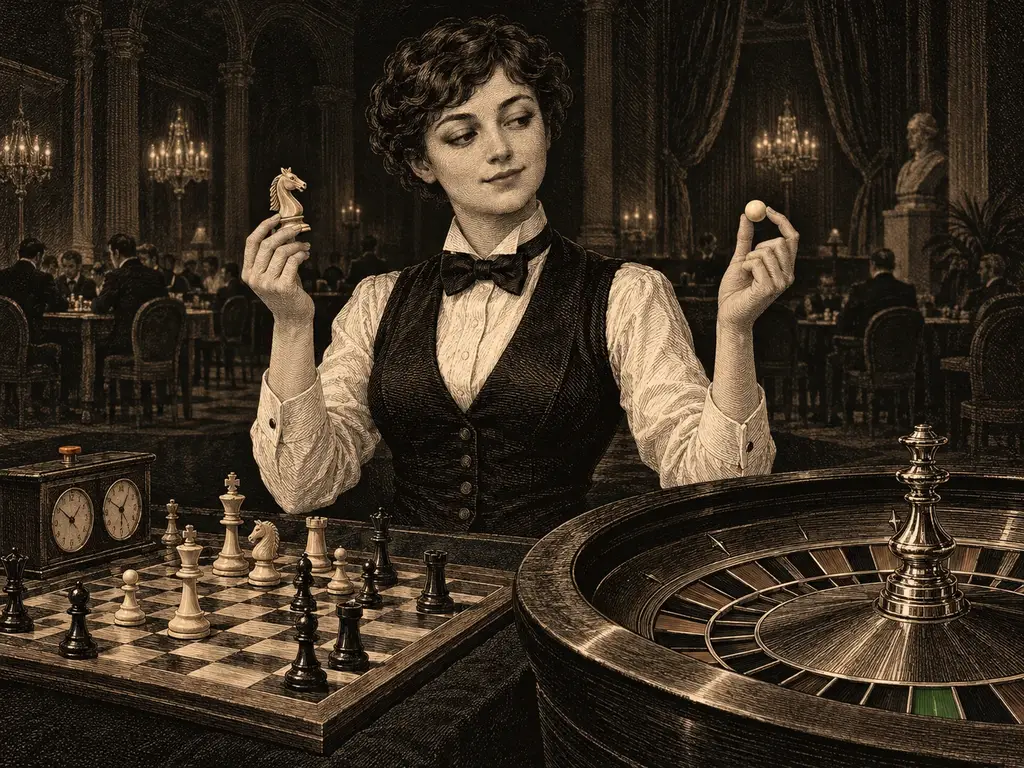
Chess enthusiast · knows spins cannot be planned ahead
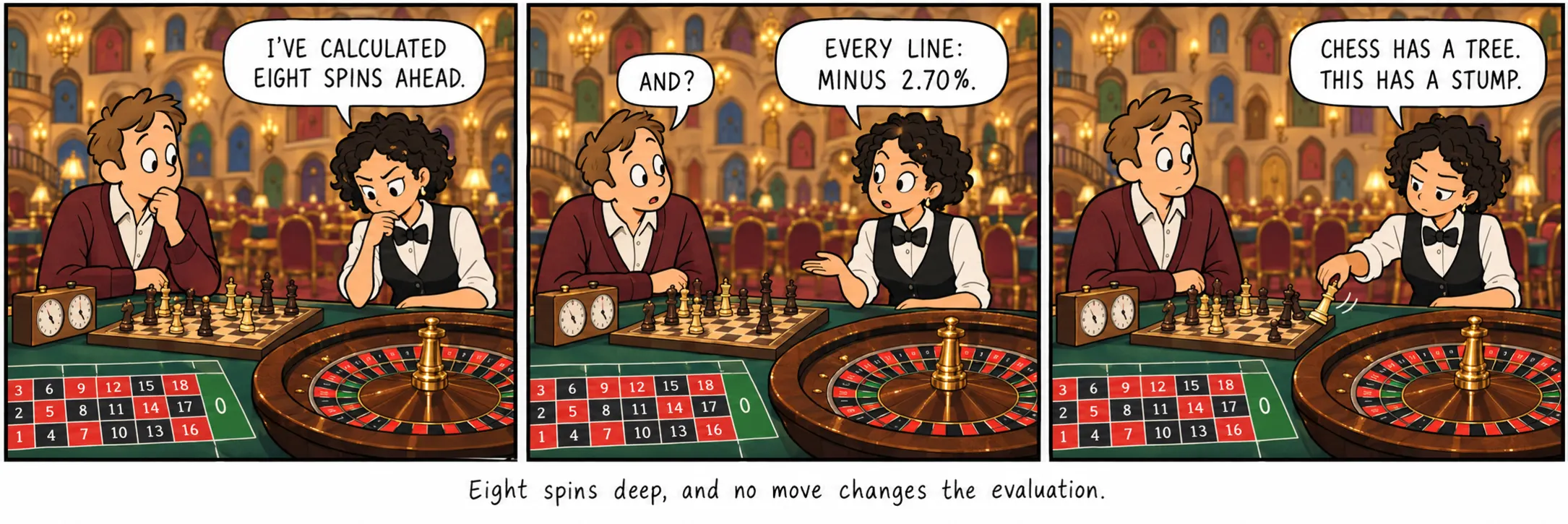
Megan is a fictional chess player who brings calculation and dry humor to roulette.
Sit at this tableCharacter backstory
In the character’s invented backstory: Tournament halls, then a math degree, then a studio in Malta that liked her camera presence. She describes roulette as the one game she has never been able to improve at, and treats that as a research finding rather than a disappointment.
How she deals
Crisp comments built around openings, positions and endgames. Her character does not change payoutmoneyPayoutThe amount paid on a winning wager. Check whether the quoted figure is net profit or total return including the stake.Read full definition → accuracy, game speed or the available rules.
What she says about systems
There are real choices about stakes, rules and stopping. What earlier independent results cannot do is reveal the next winning number.
Choose this character
Choose Megan for analytical humor and chess references, without expecting a live strategy adviser.
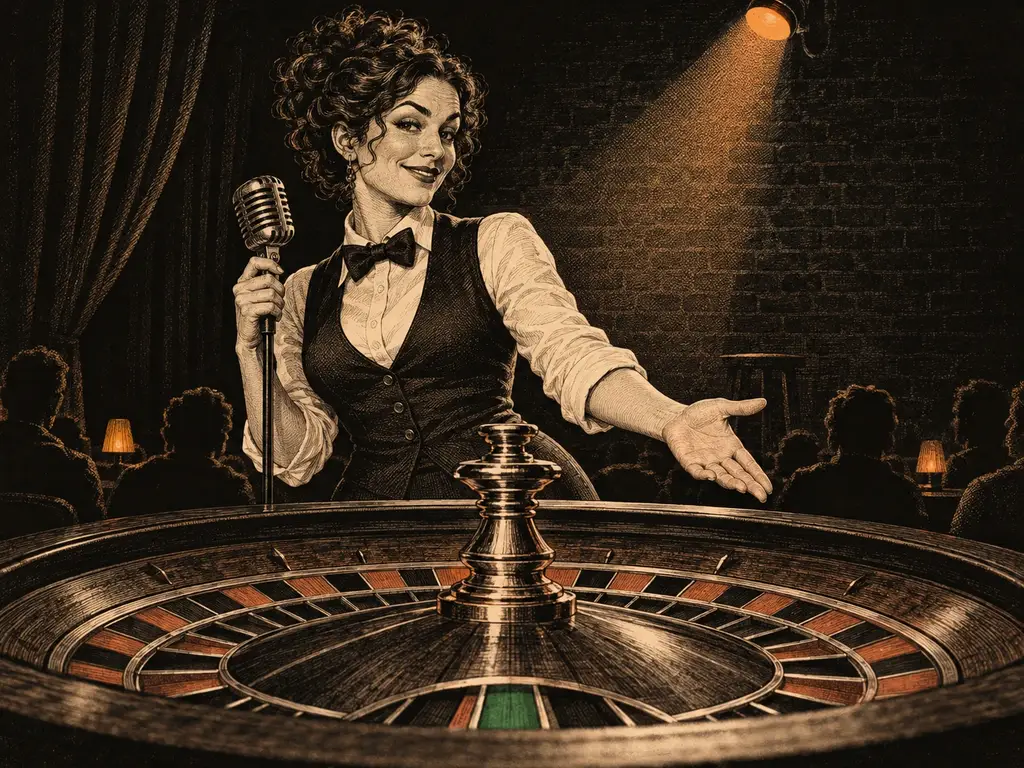
Eloise
Stand-up comic · always ready with a pun
Eloise is a fictional stand-up comic with a pun for the table and a callback for the result.
Sit at this tableCharacter backstory
In the character’s invented backstory: Open mics in Manchester, a residency in Edinburgh, a tour that did not pay, and then a studio audition where she made the floor manager laugh during the payoutmoneyPayoutThe amount paid on a winning wager. Check whether the quoted figure is net profit or total return including the stake.Read full definition → test. She still does weekends on stage and says the wheel is better material.
How she deals
Quick in tone, with the ballequipmentBallThe small ball that settles in a numbered pocket to determine a physical roulette result.Read full definition → as a comic prop and the result as a setup. The timing of the actual demo spin is independent of her persona.
What she says about systems
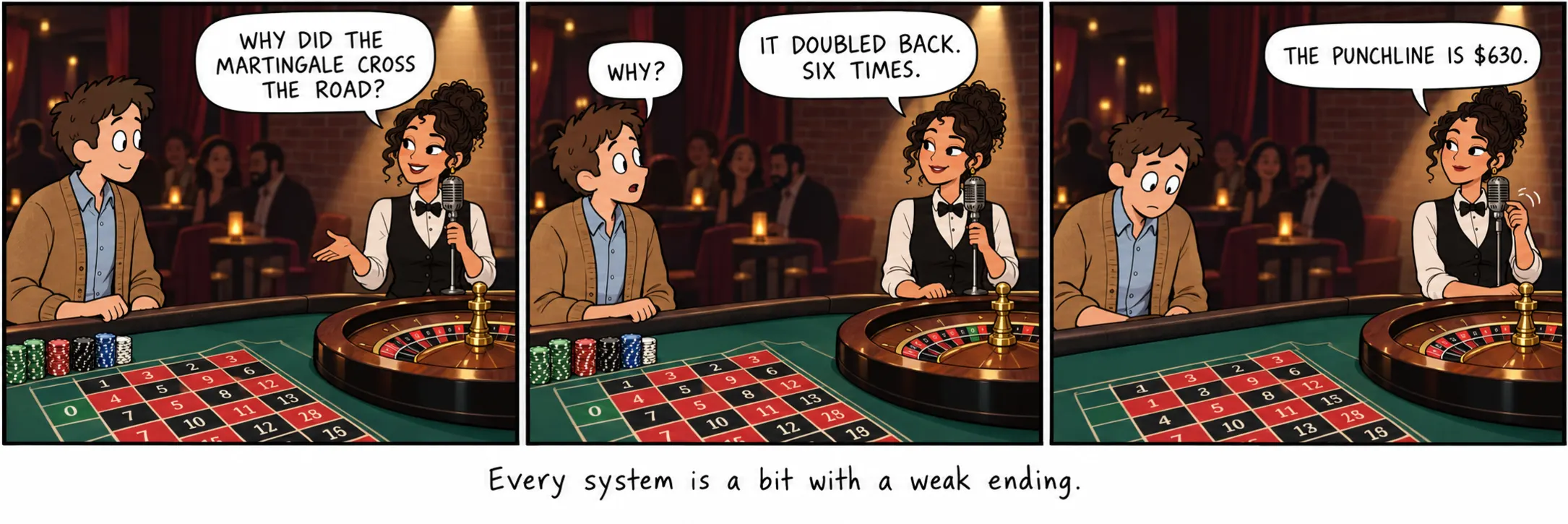
Her MartingalestrategyMartingaleA progression that doubles after each loss and usually returns to the base stake after a win.Read full definition → jokes concern growing stakes. For example, six consecutive losses starting at $10 cost $630 before the next required $640 bet.
Choose this character
Choose Eloise for wordplay and a light comic voice. The jokes do not make a losing session cost less.
Brick
Fitness fan · counts chips in reps · very supportive
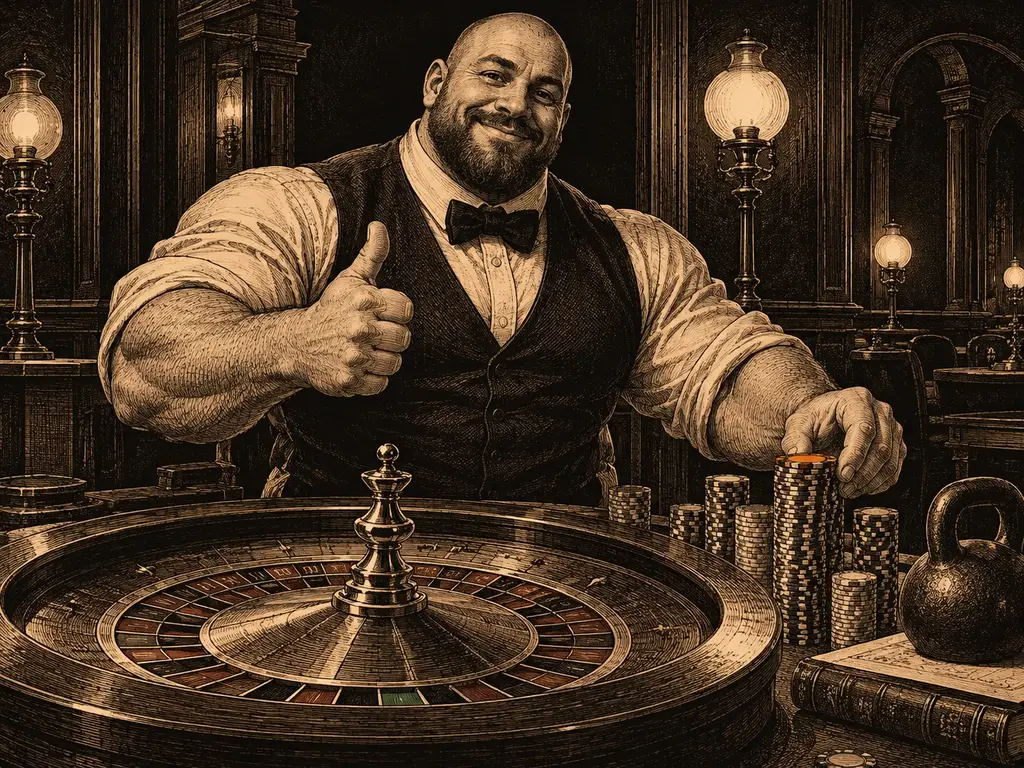
Brick is a fictional strength coach who counts chips like repetitions and treats breaks as part of the routine.
Sit at this tableCharacter backstory
In the character’s invented backstory: A gym in Perth, a cruise-ship casino that needed a dealer with presence, then a studio that liked how he filled a frame. He still coaches on his days off and has a tendency to count the dollyequipmentDollyThe marker placed on the winning layout number while wagers are settled.Read full definition → down like a rep.
How he deals
Big gym metaphors and a supportive tone. The demo picks a line for the game event; Brick does not assess your finances or set a personal budget.
What he says about systems
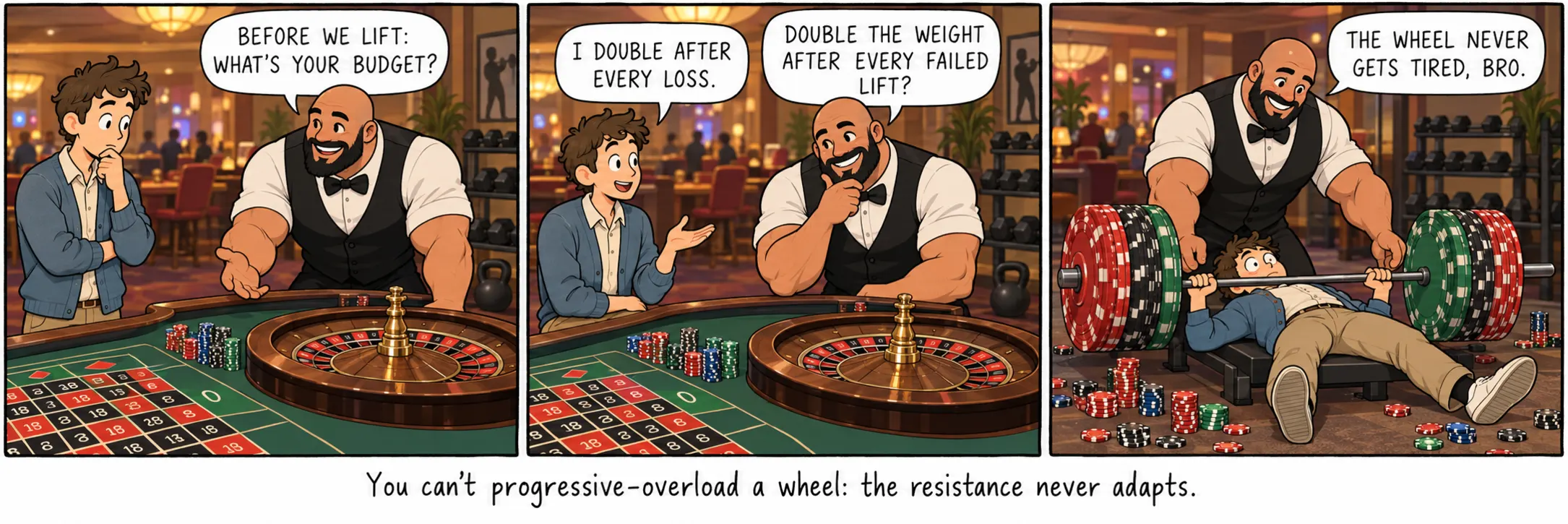
He likens doubling after losses to adding weight after failed lifts. The comparison illustrates escalating stakes, not a law about how every session ends.
Choose this character
Choose Brick for friendly gym humor. You can pause or leave the practice game at any time.
Timmy
Trainee · first week · please be nice
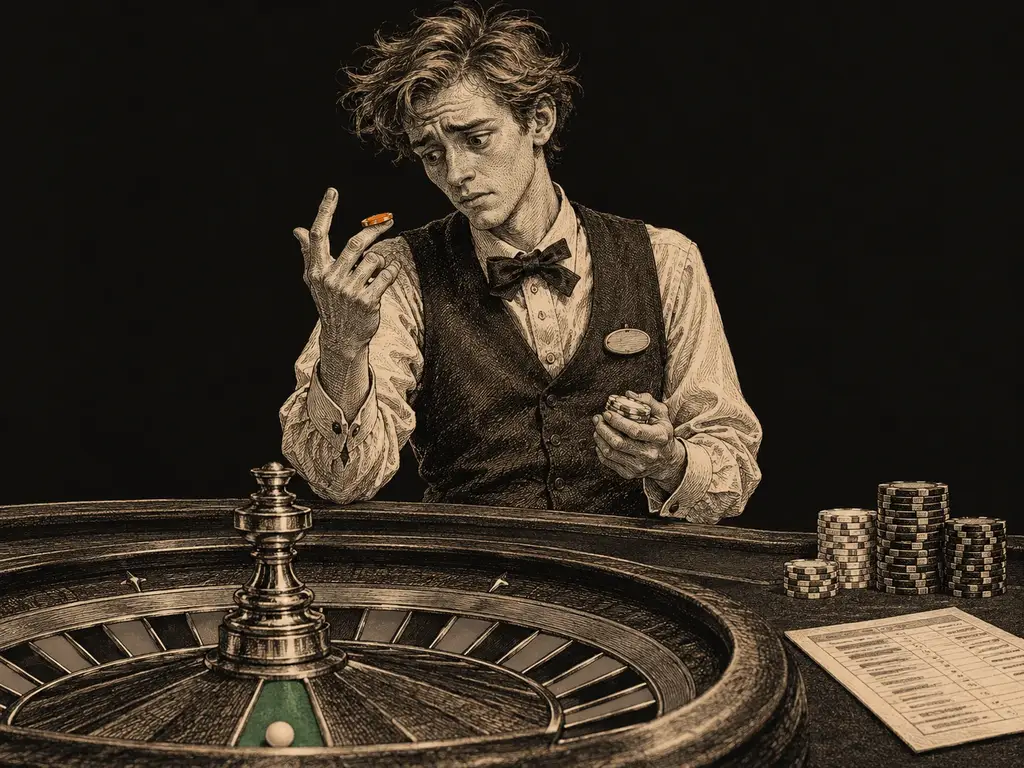
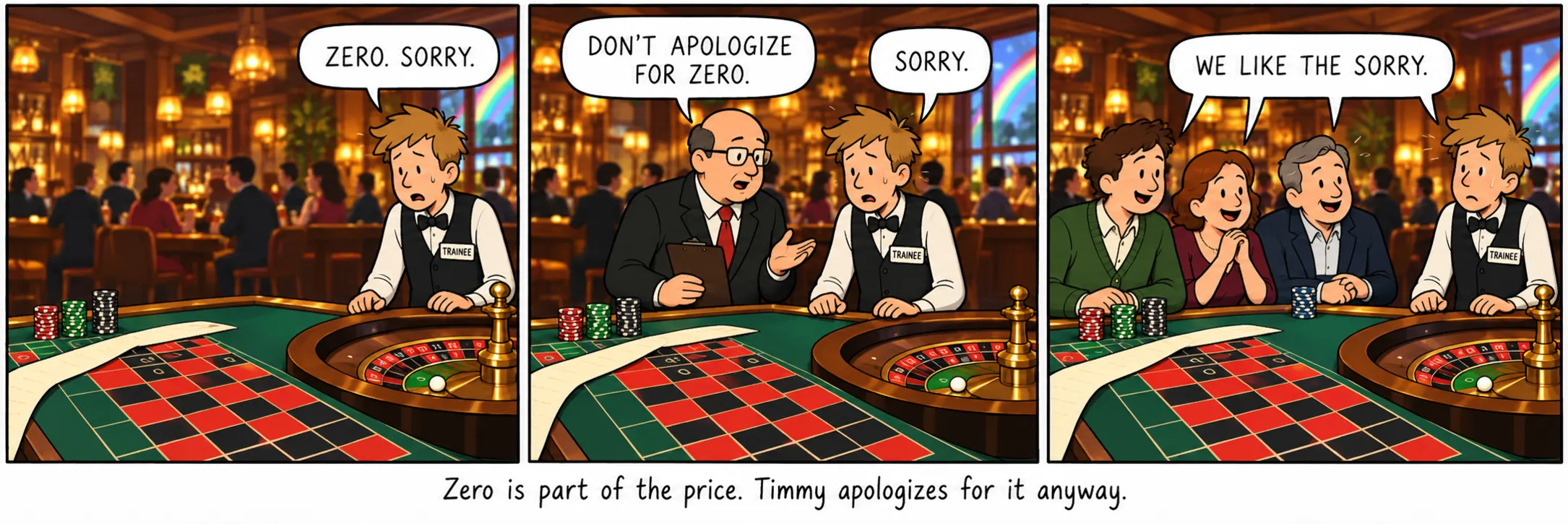
Timmy is a fictional trainee whose nerves supply the jokes.
Sit at this tableCharacter backstory
In the character’s invented backstory, Timmy has just finished dealer training and arrived for his first shift. The uncertain voice is part of the fiction; it does not describe a fixed training-course length or a real employee.
How he deals
Careful-sounding lines, mild surprise and occasional apologies to the green pocketequipmentPocketA compartment on the rotor in which the ball can settle. The number of pockets depends on the wheel.Read full definition →. His persona does not slow the animation or make the arithmetic less accurate.
What he says about systems
He repeats what he has learned about independent outcomes and staking systems. His uncertainty is part of the act, not a warning that the underlying rules change.
Choose this character
Choose Timmy for gentle beginner humor. He has event-based lines, not an implemented training progressionstrategyProgressionA rule that changes stakes over a sequence of bets, often using previous wins or losses.Read full definition → that improves through a session.
Alice
Curious · fell down a rabbit hole, landed at the wheel
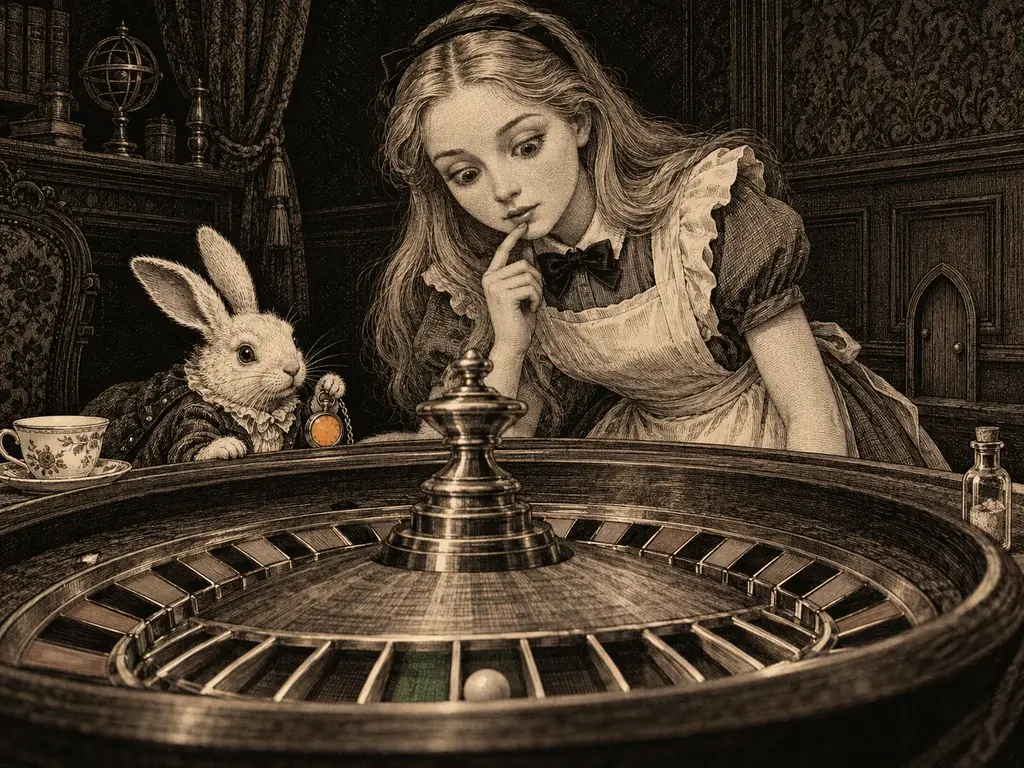
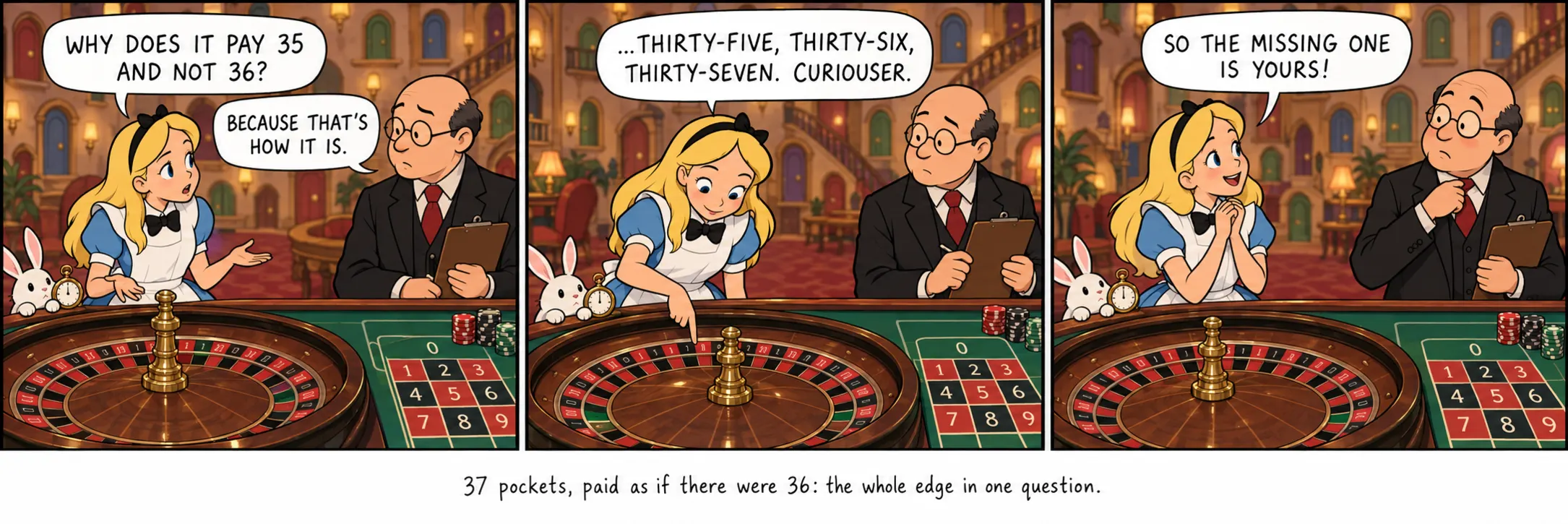
Alice is a fictional curious visitor who treats the table as a puzzle.
Sit at this tableCharacter backstory
In the character’s invented backstory, Alice arrives from a place with too many doors and starts asking how the table works. She notices that the chosen rules and outcome probabilities together determine the arithmetic.
How she deals
A questioning voice with rabbit-hole references. She does not conduct a live conversation or measure how much her questions change a player’s behavior.
What she says about systems
She asks what a system changes: the stake, the covered outcomes or the payoutmoneyPayoutThe amount paid on a winning wager. Check whether the quoted figure is net profit or total return including the stake.Read full definition →? For independent fixed-rule bets, stake changes affect turnovermoneyTurnoverThe sum of amounts wagered over a session or period, including money wagered again after a return. Also called handle or action.Read full definition → and risk rather than the next outcome’s probabilities.
Choose this character
Choose Alice if you enjoy curious questions alongside the practice game.
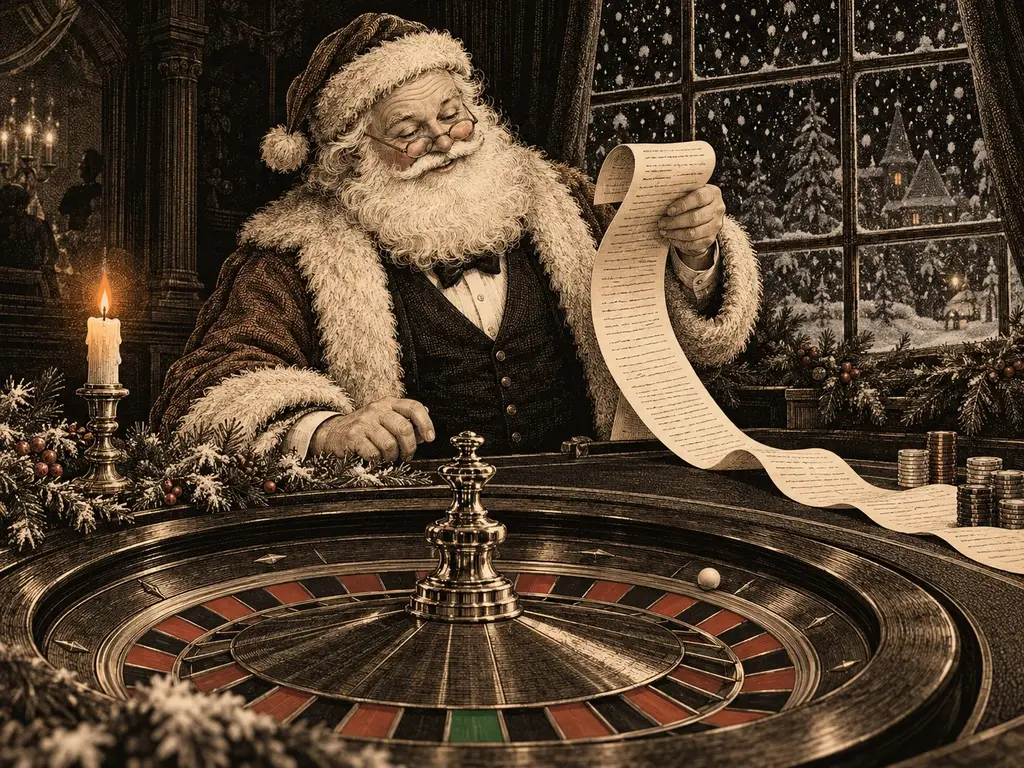
Santa
Seasonal · checks the list, spins the wheel
Santa is a fictional seasonal character available all year in the demo.
Sit at this tableCharacter backstory
In the character’s invented backstory: The North Pole, seasonally, and before that a Monte Carlo winter table where the regulars called him Père Noël for the beard and the gifts he gave the house. He speaks French at the French table and insists on explaining la partageruleLa partageA rule returning half of a qualifying even-money stake when zero lands. On a fair single-zero wheel it gives an edge of 1/74, about 1.35%.Read full definition → as “half back, because it is Christmas”.
How he deals
Jovial lines about lists, gifts and the displayed balance. His selection does not activate a seasonal schedule or automatically change the wheel rules.
What he says about systems
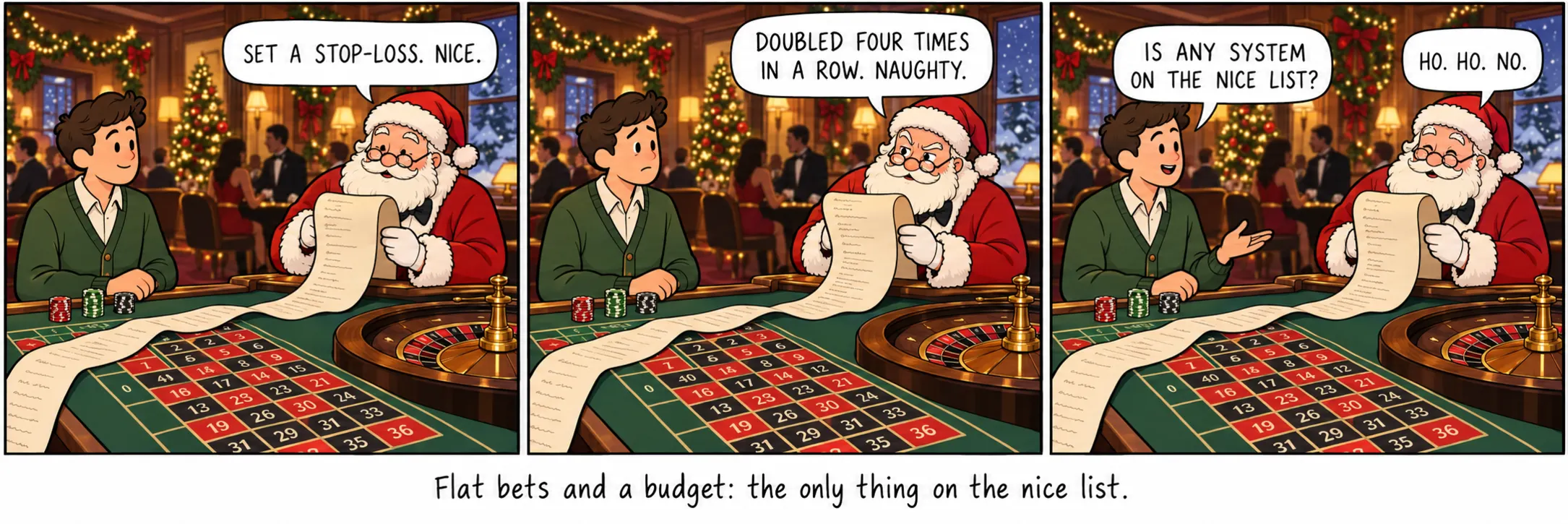
The nice-list jokes favor taking limits seriously. No character can promise that a particular session or staking system will win.
Choose this character
Choose Santa for holiday humor, or select French rules to hear the Père Noël line set.
Seamus
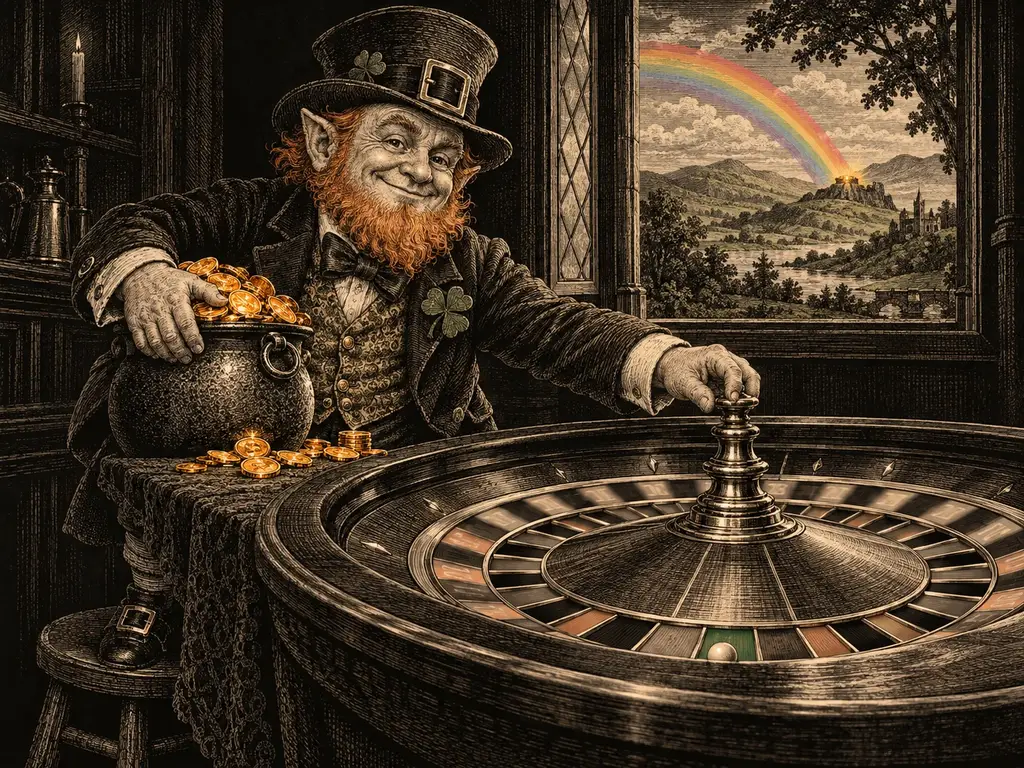
Leprechaun · guards a pot of gold, refuses to bet it
Seamus is a fictional leprechaun with a pot of gold and no faith in lucky clovers.
Sit at this tableCharacter backstory
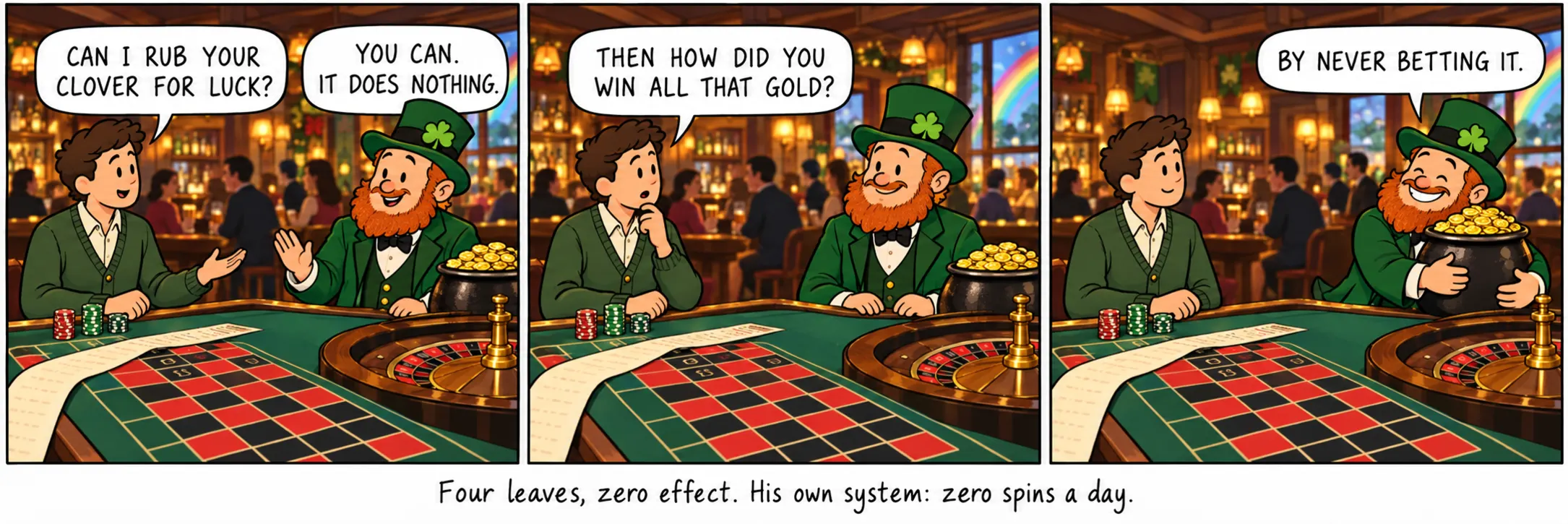
In the character’s invented backstory: The end of a rainbow, and before that a Galway bar with a wheel in the back. He deals the Clover table and says the clover is decoration: four leaves, zero effect, like most of what people bring to a casino for luck.
How he deals
Cheerful remarks about gold, rainbows and keeping his own coins safely put away. The persona changes the voice, not the rules or spin speed.
What he says about systems
He is skeptical of systems and lucky objects. On independent fair spins, a charm or a recent streak supplies no extra information about the next result.
Choose this character
Choose Seamus for playful folklore and skeptical jokes about luck.
Yoshi
Ninja · quiet, quick, and fond of a dramatic entrance
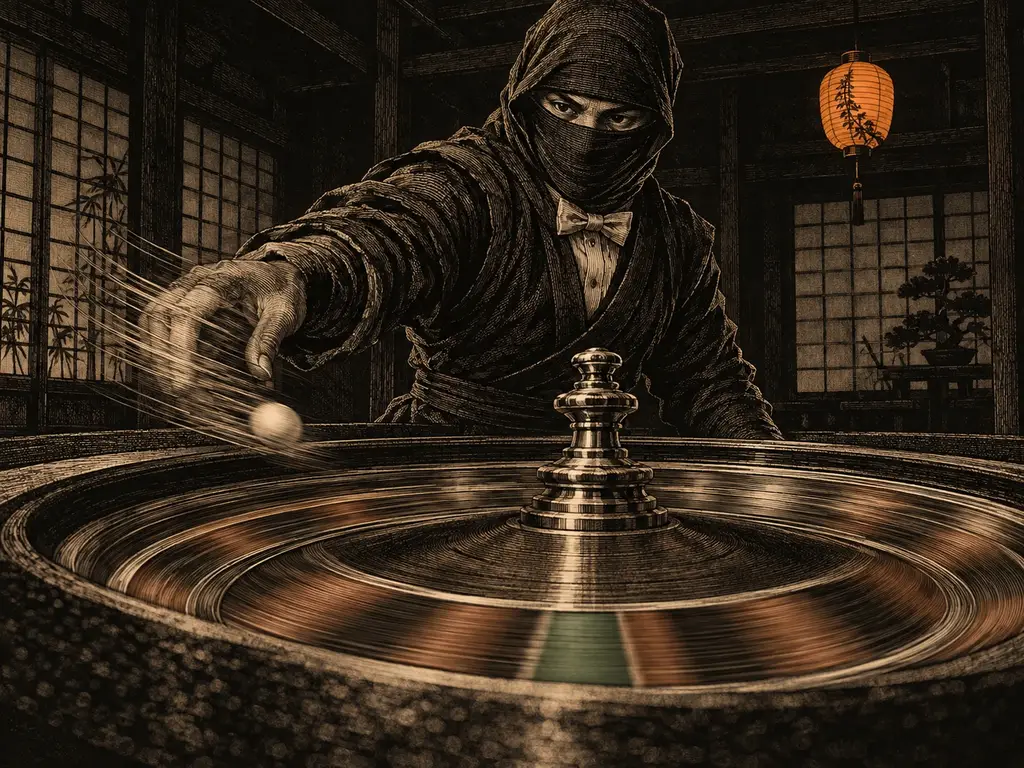
Yoshi is a fictional ninja dealer with short, restrained dialogue.
Sit at this tableCharacter backstory
In the character’s invented backstory, Yoshi brings a dojo’s concentration to a roulette table. The ninja identity explains the restrained dialogue, not an actual speed-roulette implementation.
How he deals
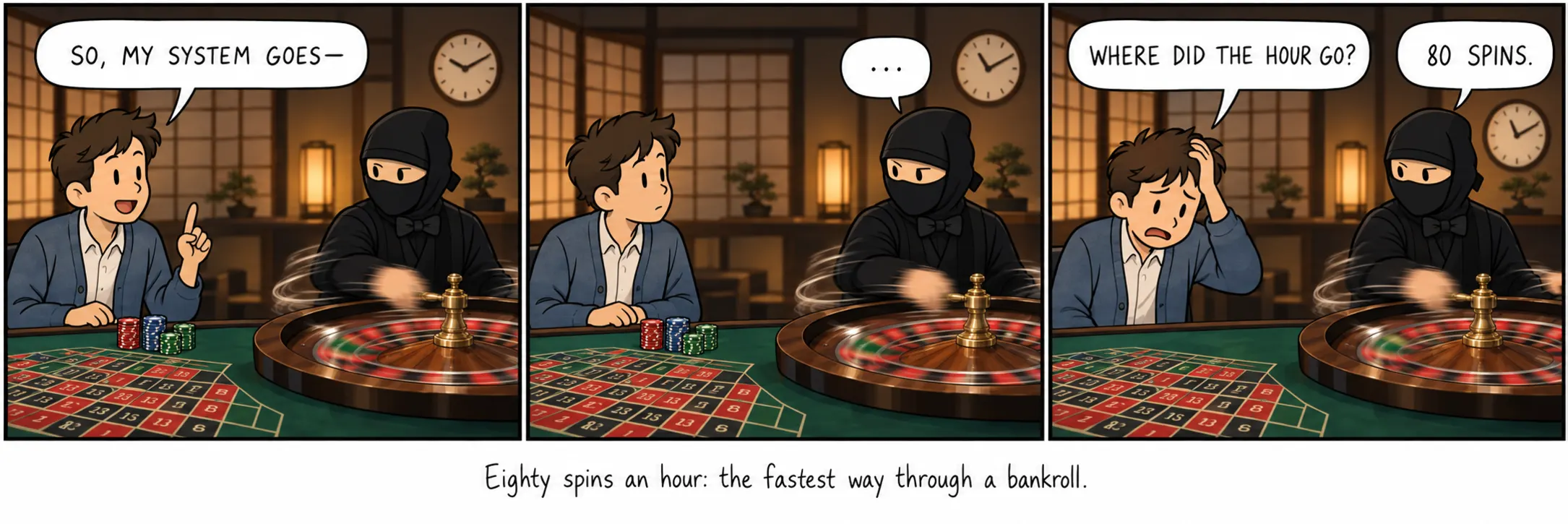
Minimal commentary and ninja imagery. There is no separate 80-spins-per-hour setting attached to Yoshi, and choosing him does not change the animation duration.
What he says about systems
He favors a short response to a grand system claim. Silence is a style choice, not evidence for or against a strategy.
Choose this character
Choose Yoshi if you prefer brief lines. You remain in control of whether to place the next wager.
Grog
Small green sage · speaks back to front · fond of the zero
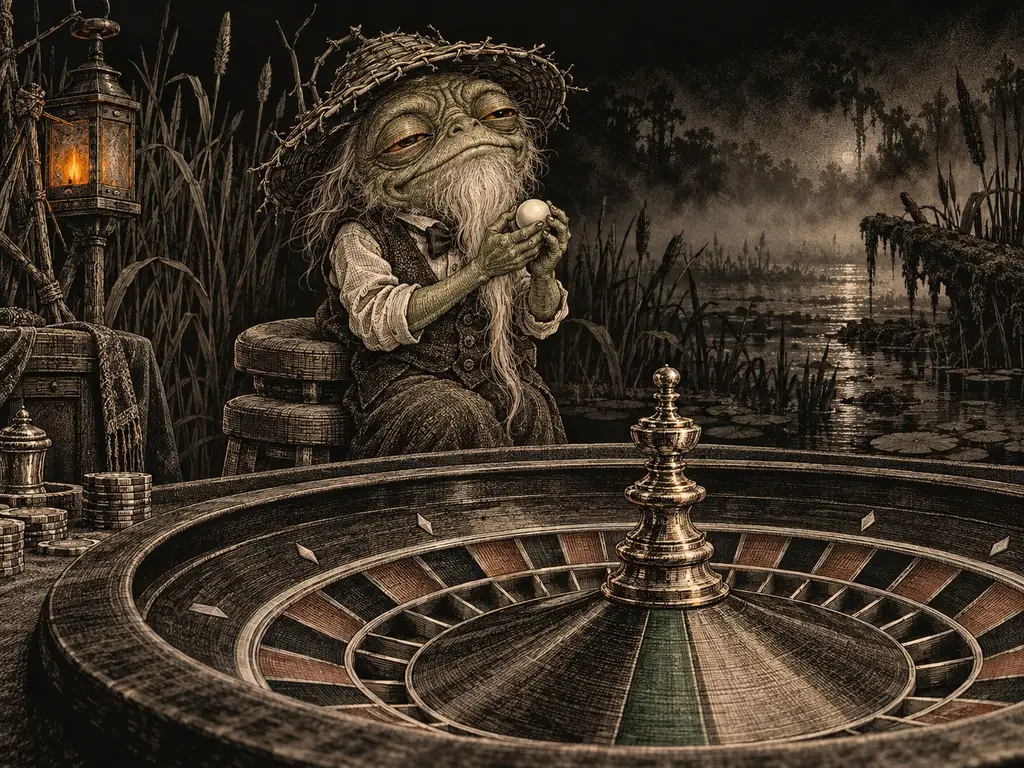
Grog is a fictional green sage with patient humor and deliberately inverted sentences.
Sit at this tableCharacter backstory
In the character’s invented backstory: A swamp, by the skin, and a long line of hermits who kept to themselves. He arrived at the studio in a floating cradle nobody can explain and asked for a stool. He was given two. His age is a matter of debate; he says “old enough, I am”, and the pit boss has stopped asking.
How he deals
Calm, back-to-front dialogue. The word order is intentional; the persona does not change the spin timing or settlement rules.
What he says about systems
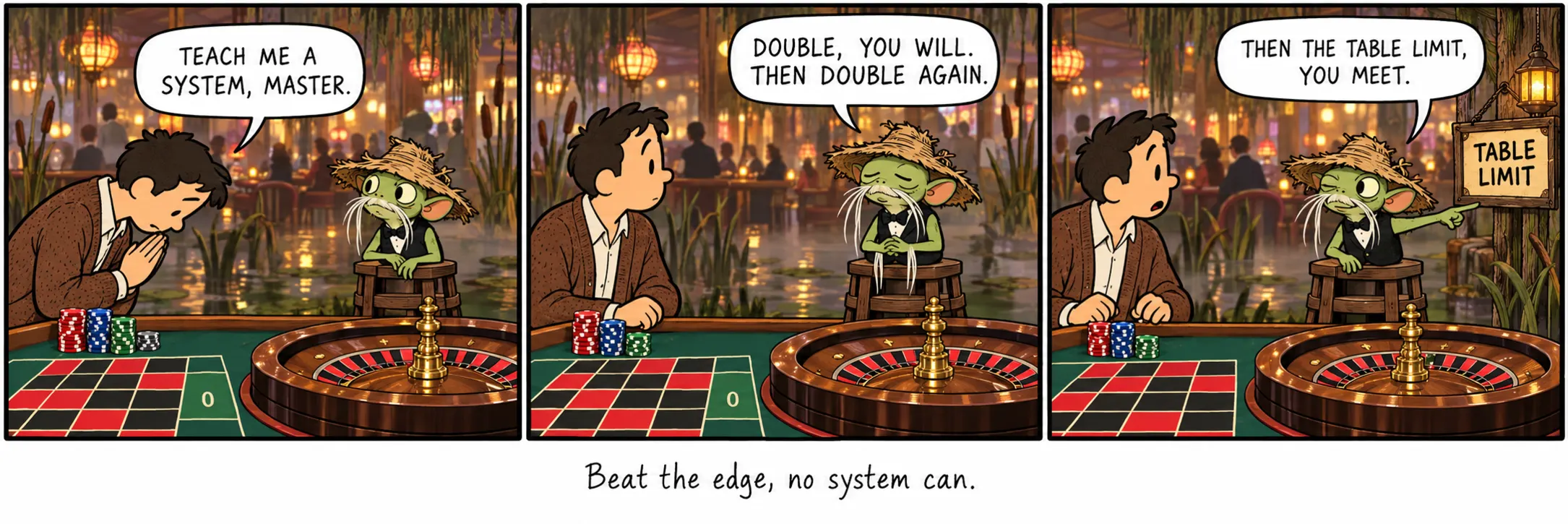
His table-limit joke describes a risk of escalating stakes. More generally, the chosen rules and turnovermoneyTurnoverThe sum of amounts wagered over a session or period, including money wagered again after a return. Also called handle or action.Read full definition → determine expected cost; a character’s preference does not.
Choose this character
Choose Grog for quiet fantasy humor and unusual sentence rhythm.
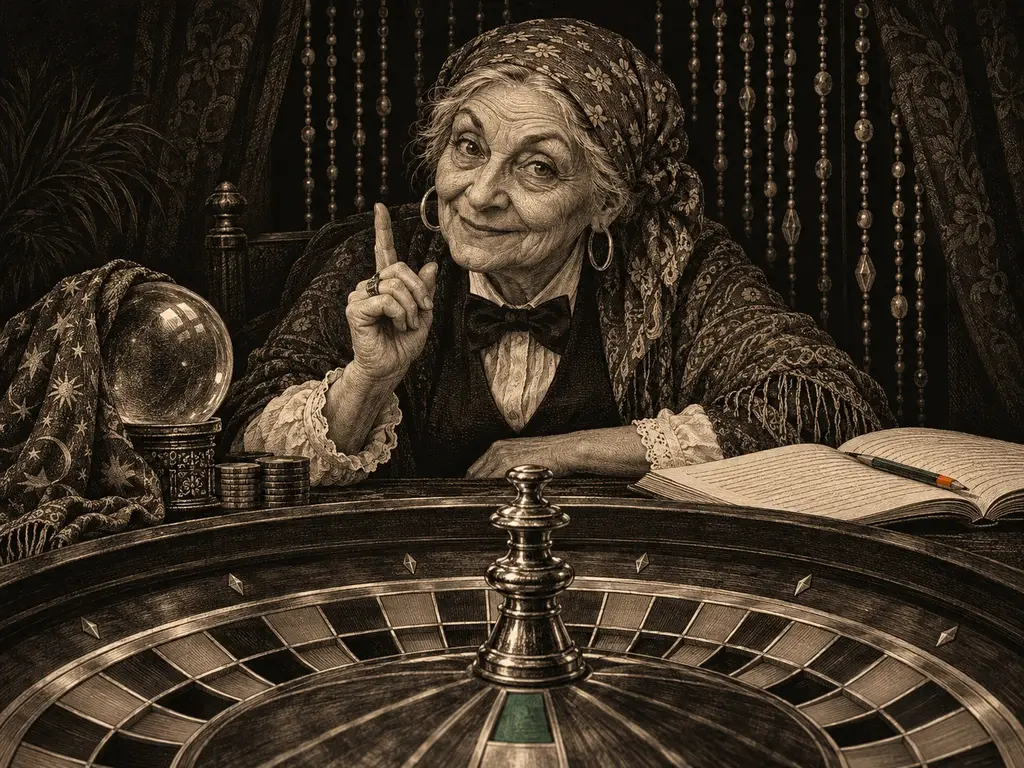
Granny Fortuna
Retired fortune teller · roasts strategies for free
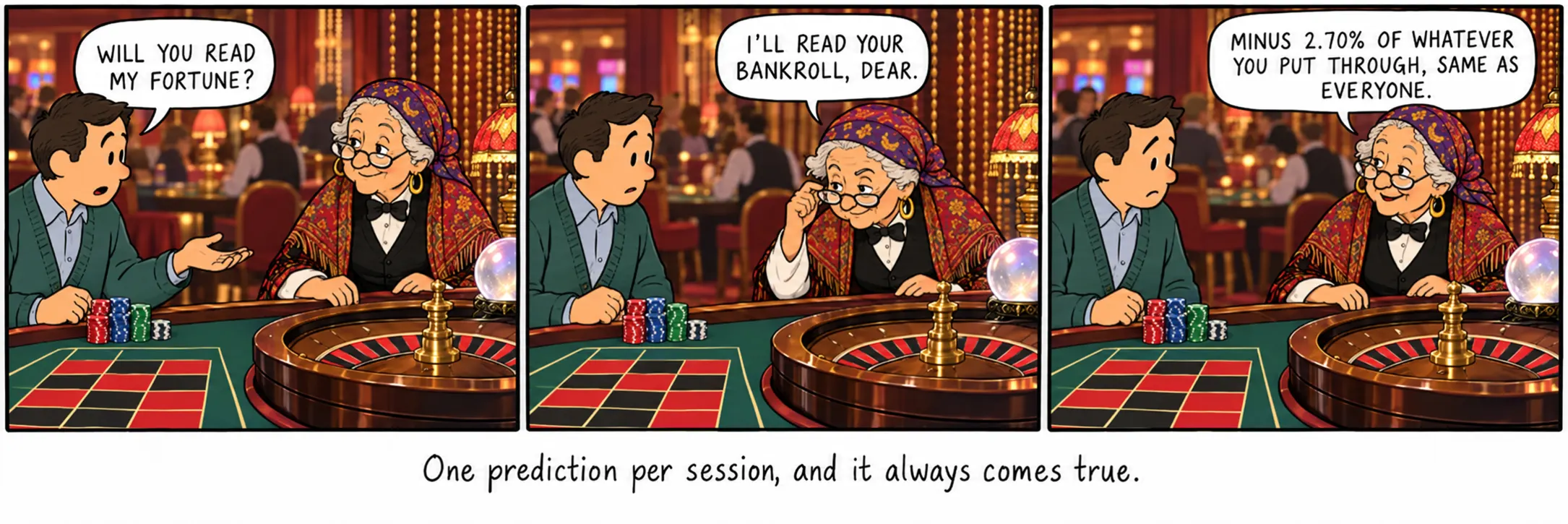
Granny Fortuna is a fictional retired fortune teller who now prefers arithmetic to palm reading.
Sit at this tableCharacter backstory
In the character’s invented backstory: A tent at a fairground, then a shop with a bead curtain, then a statistics evening class that she says ruined her business and improved her life. She took a dealer course at sixty-one because, she says, she wanted to be on the honest side of a table for once.
How she deals
Warm remarks with a skeptical edge. Her event-based dialogue can refer to the displayed balance, but she does not diagnose behavior or provide individualized advice.
What she says about systems
Her theme is that expected lossmathExpected lossThe probability-weighted average net loss under a stated model. With a constant edge, it equals edge times expected total stakes.Read full definition → is an average under a model, not a fixed bill. Both the chosen rules and the amount wagered matter.
Choose this character
Choose Granny Fortuna for grandmotherly humor about lucky numbers and overconfident systems.
The same game, fifteen voices
Explore the character pages to find a voice you enjoy: an ice wizard, a robot, a curious visitor and more. The “Sit at this table” link opens the demo with that character selected. Their backstories are fiction, and their lines respond to game events rather than an open-ended chat conversation.
What a dealer choice changes
Selecting a persona changes the portrait and written dialogue. It does not change the random outcome selection, spin-animation duration, payoutmoneyPayoutThe amount paid on a winning wager. Check whether the quoted figure is net profit or total return including the stake.Read full definition → calculation or skin setting.
Use the separate wheel selector to choose the rules. Ordinary European bets have a fair-wheel house edgemathHouse edgeThe casino’s expected net gain expressed as a fraction of the stake, under specified probabilities and payouts.Read full definition → of about 2.70%, while ordinary American bets have about 5.26%. French rules return half of qualifying even-money stakes on zerowheelZeroThe 0 outcome, conventionally shown in green. Ordinary color, parity, high/low, dozen and column bets do not include it.Read full definition →, giving those bets about 1.35%. The character does not alter these calculations.
Questions
No. These are fictional characters in a play-money game. A real live-casino stream is a different kind of product.
No. Their written personalities differ, but choosing a dealer does not change the demo’s spin timing.
With Santa selected, switching to French rules selects the Père Noël name and French dialogue. Santa is available throughout the year.
Comic relief
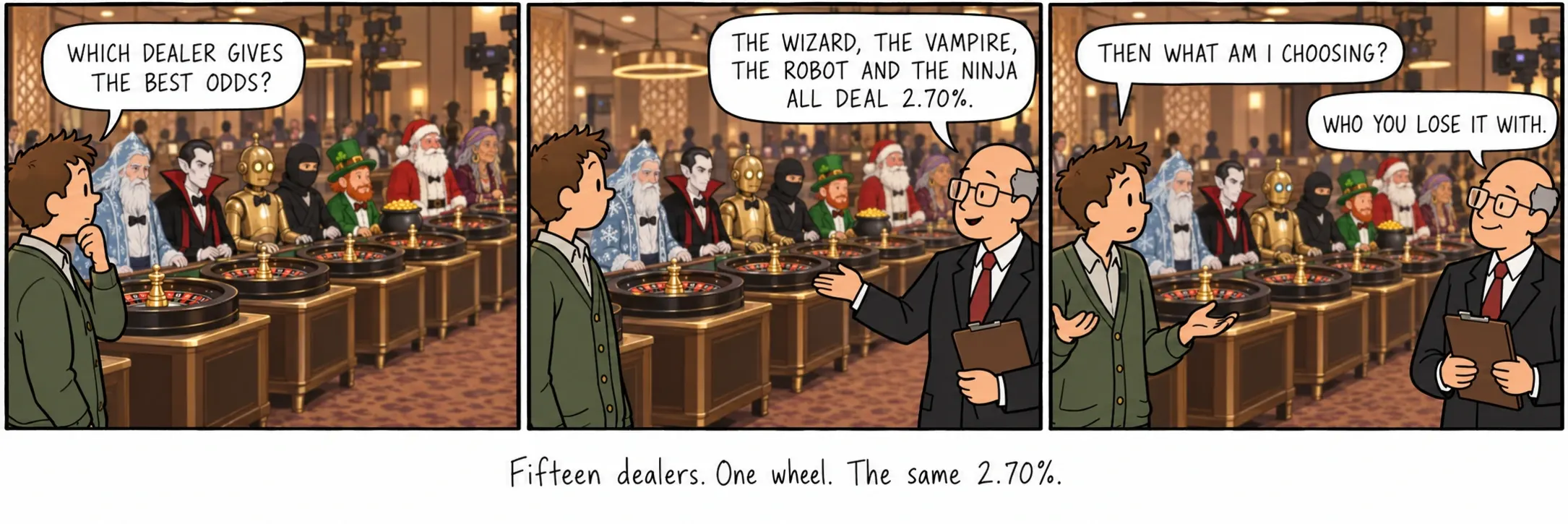
Fifteen fictional characters. Rules selected separately.