Can Roulette Dealers Hit Numbers? The Myth
A dealer hitting a number is not evidence that the dealer aimed for it.
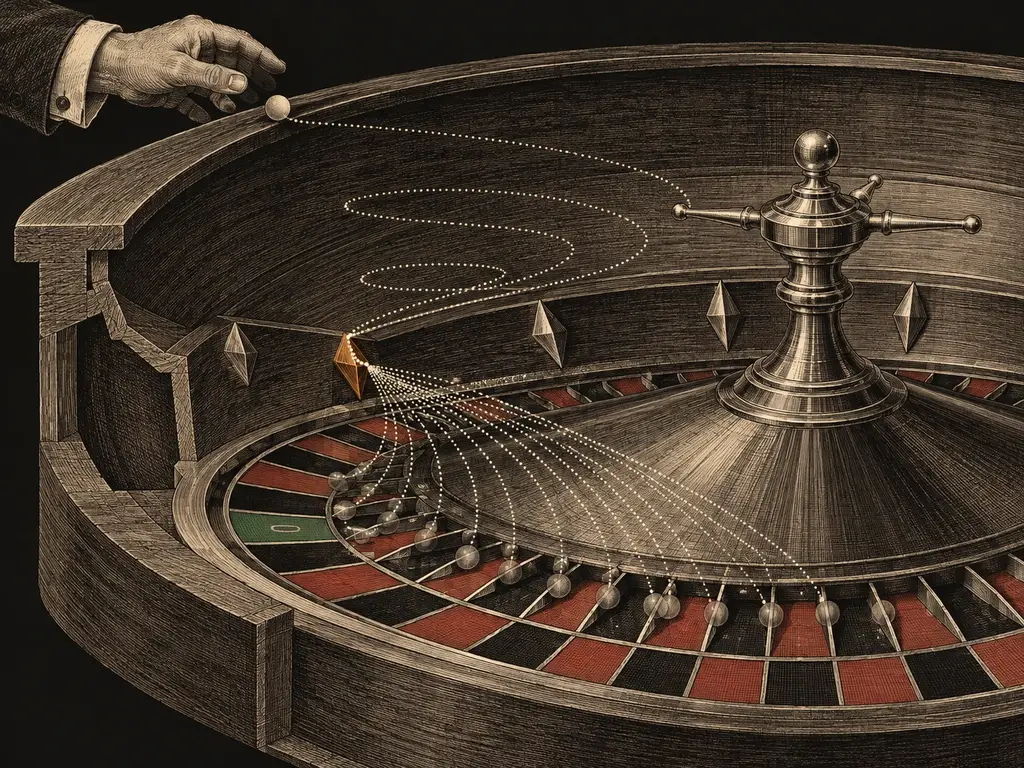
A dealer influences the launch and rotor motion. That does not establish reliable control of the final pocket. To assess an aiming claim, distinguish a selected video or lucky result from repeated, controlled measurements under the actual rules.
The claim
After a losing spin, especially on zerowheelZeroThe 0 outcome, conventionally shown in green. Ordinary color, parity, high/low, dozen and column bets do not include it.Read full definition →, players sometimes believe the dealer aimed the ballequipmentBallThe small ball that settles in a numbered pocket to determine a physical roulette result.Read full definition →. The belief gets support from the dealer-signature hypothesis in the Lab, which asks whether a dealer’s habits make the drop sectorwheelSectorA continuous arc of neighboring pockets around the wheel, rather than a group defined by the betting layout.Read full definition → somewhat predictable. That hypothesis is about sectors and statistics; the myth is about pocketsequipmentPocketA compartment on the rotor in which the ball can settle. The number of pockets depends on the wheel.Read full definition → and intent.
What a dealer can do
A hand-launched game lets the dealer influence the rotorequipmentRotorThe rotating part of a physical roulette wheel, carrying the numbered pockets.Read full definition → push and ball launch. The outcome also depends on the wheel’s state, the ball and later collisions. Repeating one input approximately does not prove that the final pocket can be chosen.
Why a hit is not proof
A claim of reliable pocket aiming needs more than a successful attempt. Record the target before each trial, include misses, compare the results with an appropriate chance model and test whether the result holds in fresh trials.
The cited physical-prediction research studies information in measured motion. It does not prove that dealers can deliberately choose a pocket, or that every wheel has eight deflectorsequipmentDeflectorAn obstacle on the apron that redirects the falling ball. Names include diamond, canoe and pin.Read full definition → or the same scatter range. Predictability and control are different questions.
What oversight can establish
The house edgemathHouse edgeThe casino’s expected net gain expressed as a fraction of the stake, under specified probabilities and payouts.Read full definition → is an expectation over possible outcomes, not a fixed profit on each spin. It is therefore not an argument that interference could never affect a casino’s return.
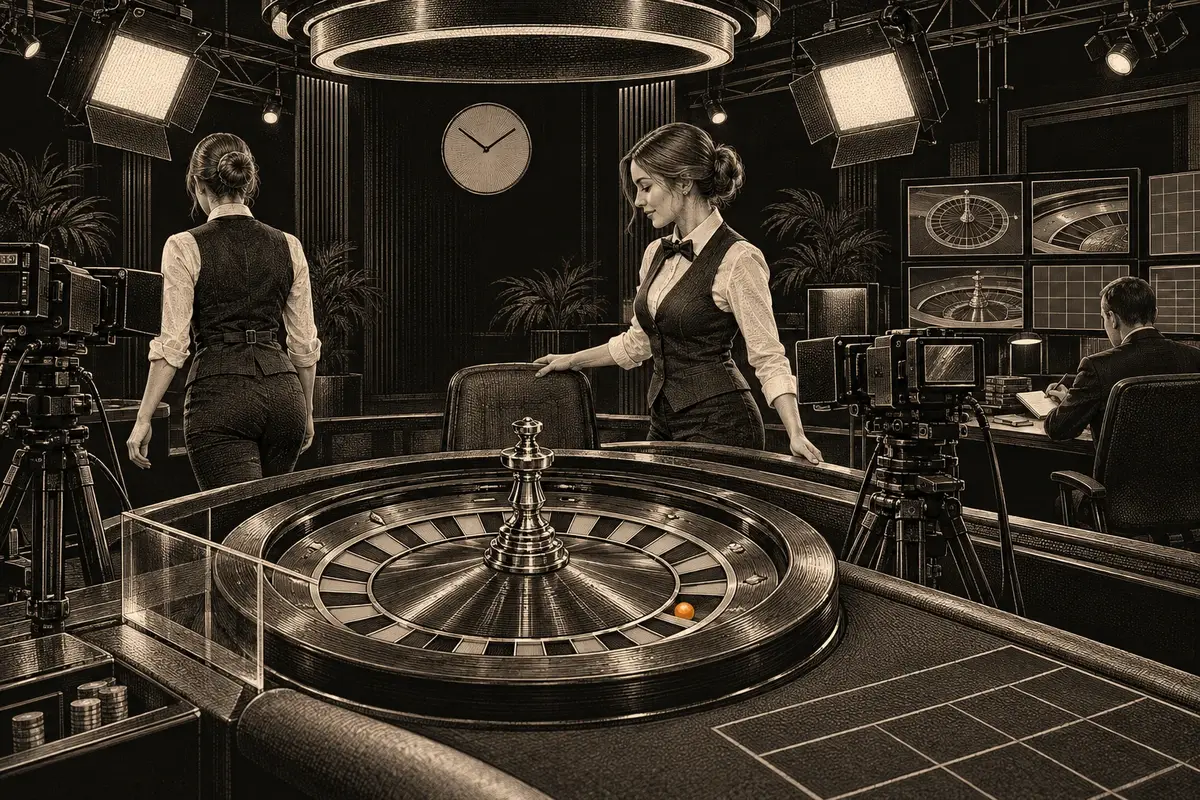
UK Gambling Commission RTS17 requires fair, independently auditable live-dealer operations and describes equipment oversight, training, surveillance and game logs. It does not prescribe one worldwide dealer-change interval or betting cutoff. Controls provide evidence and deterrence; they do not make misconduct logically impossible.
Where the grain of truth is
The dealer-signature hypothesis asks whether repeated launch conditions can provide predictive information. It does not establish intentional targeting, a guaranteed edge or a particular percentage return. A useful test must define its reference point and account for wheel conditions, sample size and selection. The Lab page explains these distinctions.
Questions
No. On independent uniform single-zero spins, the chance of at least three zeros in a preselected set of 50 spins is about 15.27%; exactly three is about 10.68%. Searching many sessions changes the comparison.
Yes. Documented late-bet cases show why procedure and oversight matter. They do not establish an ability to aim the ball.
Procedures vary. Check the rules for the particular game; do not assume a universal launch rule.
Comic relief
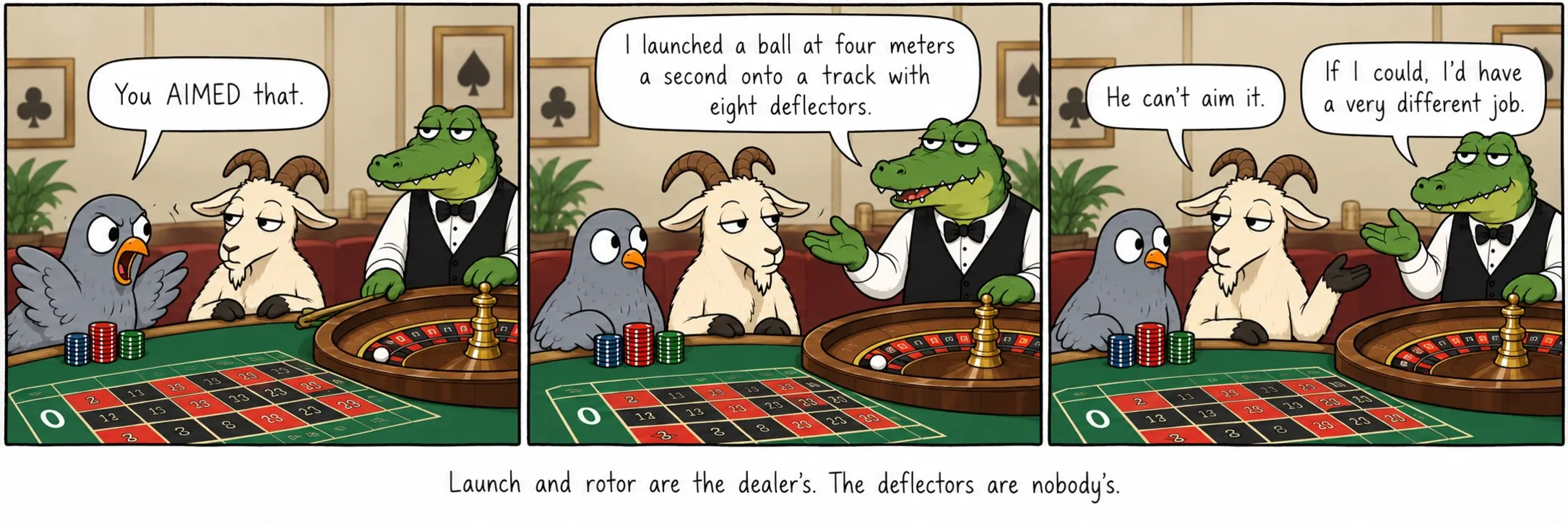
A targeting claim needs repeated, controlled tests.
Sources
- Small, M. & Tse, C. K. “Predicting the outcome of roulette.”
- Barnhart, R. T. Beating the Wheel.
- UK Gambling Commission. Remote gambling and software technical standards.
- Wizard of Odds. “Roulette Basics”, section on ball steering.
- Small and Tse, Predicting the outcome of roulette — physical prediction research
- UK Gambling Commission, RTS 17 — live dealer studios