Mini Roulette
Thirteen pockets, 0 to 12, and a house edgemathHouse edgeThe share of each stake the casino keeps on average: 2.70% in European roulette.Read full → of 7.69%.
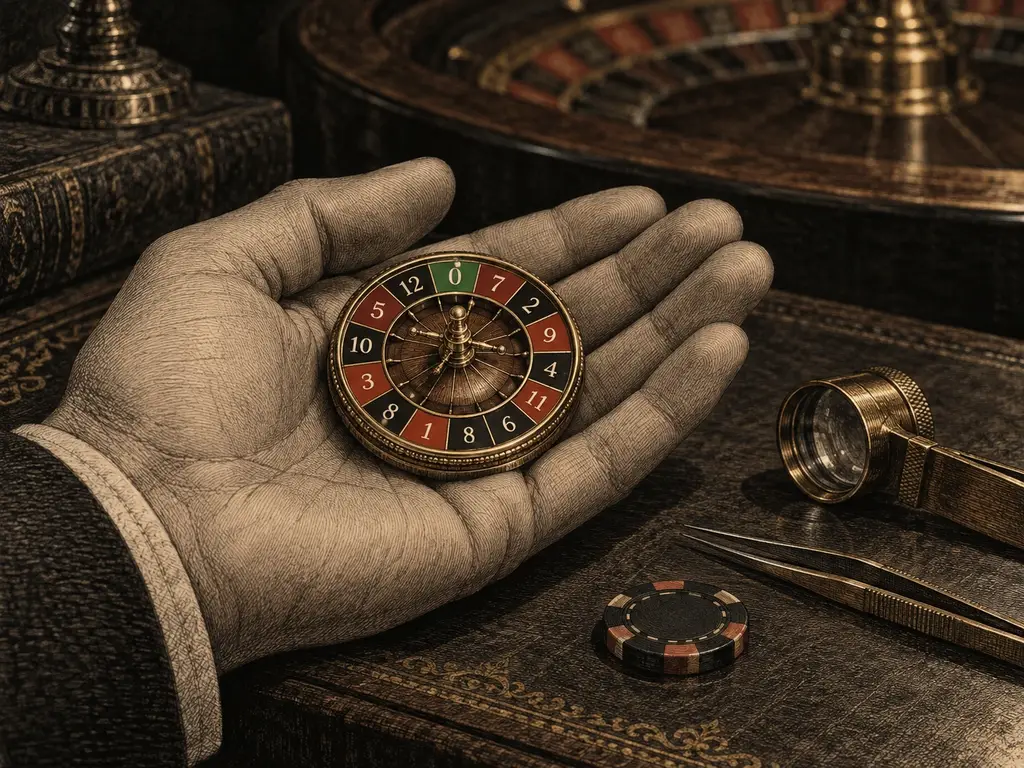
Mini roulette pays 11:1 on a straight up where fair odds on 13 pockets would be 12:1. That missing unitmoneyUnitThe base stake a system or a player works in. Progressions are described in units so they apply at any table.Read full → is 1/13 of every bet: 7.69%, nearly three times the European edge. Some versions return half on zero.
Payouts
Straight upbetStraight upA single number, pays 35:1.Read full → 11:1, splitbetSplitTwo adjacent numbers, pays 17:1.Read full → 5:1, streetbetStreetThree numbers in a row of the layout, pays 11:1. French: transversale.Read full → 3:1, cornerbetCornerFour numbers sharing a corner on the layout, pays 8:1.Read full → and the three “quads” (1–4, 5–8, 9–12) 2:1, even money 1:1. Each follows 12/n − 1 against 13 pocketsequipmentPocketOne of the 37 numbered compartments on the rotor. Also: slot, cup.Read full →, which is the same trick as the big wheel (36/n − 1 against 37) with a much larger house share: one pocket in thirteen instead of one in thirty-seven.
Where you find it
RNG casinos and a few live studios, usually marketed as quick or beginner-friendly. The small wheel spins fast, so the expected lossmathExpected lossExpected value times total amount wagered; the average amount lost over a session or a period.Read full → per hour is high on both counts: a larger edge and more spins. Some versions soften the edge by returning half of any losing bet when zerowheelZeroThe single green pocket that no even-money, dozen or column bet covers; the source of the house edge. Also: single zero, 0.Read full → hits, which brings all bets to 3.85%, still above European.
Why it looks friendly
Twelve numbers feel easier to cover than thirty-six, the wheel is cute, and a straight up hits one spin in thirteen instead of one in thirty-seven, so wins come often. The payoutmoneyPayoutWhat a winning bet returns, quoted as “X to 1” on top of the returned stake.Read full → of 11:1 feels generous. The arithmetic says the player is giving up one pocket in thirteen on every bet, which is the most expensive roulette format in common use, tied with triple zero.
The lesson
Fewer pockets do not mean better odds. The edge is the ratio of house pockets to total pockets, and one in thirteen is far worse than one in thirty-seven. The format is honest about its payouts; the player has to do the division.
Questions
For learning the bets, fine, at the smallest stake. For value, no.
Yes, and they lose 7.69% of turnovermoneyTurnoverThe total amount wagered over a session or period, counting re-bet winnings. Also: handle, action.Read full → instead of 2.70%.
The half-back versions are the closest. Check the help panel.
Fun with Math
Try these yourself first. Each solution is folded; open it when you are ready.
Some mini roulette games hand back half of every losing bet when zerowheelZeroThe single green pocket that no even-money, dozen or column bet covers; the source of the house edge. Also: single zero, 0.Read full → comes up. What does that do to the house edgemathHouse edgeThe share of each stake the casino keeps on average: 2.70% in European roulette.Read full →? What about a bet on zero itself?
Show the solution
Answer Every other bet drops to 3.85%. A straight upbetStraight upA single number, pays 35:1.Read full → on zero stays at 7.69%.
On 13 pocketsequipmentPocketOne of the 37 numbered compartments on the rotor. Also: slot, cup.Read full → every bet is paid as if zero were not there, so it loses 1 unitmoneyUnitThe base stake a system or a player works in. Progressions are described in units so they apply at any table.Read full → in 13 spins: 7.69%. All of that loss happens on the zero spin, which takes the whole stake.
Giving back half on zero halves that loss: 1/26, 3.85%.
A bet on zero does not lose on the zero spin, it wins: 11 to 1 once in 13 spins, against 12 losses. Its 1/13 is lost on the other numbers, where no half comes back. So it stays at 7.69%.
Comic relief
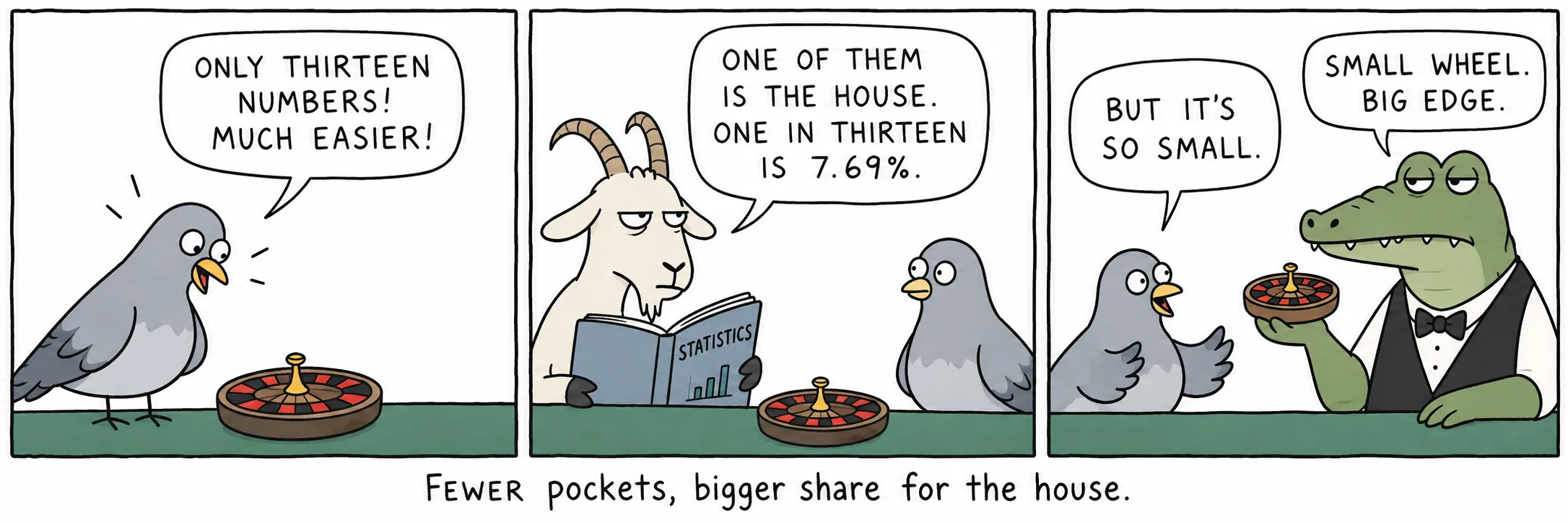
Fewer pockets, bigger share for the house.
Sources
- Ethier, S. N. The Doctrine of Chances: Probabilistic Aspects of Gambling.