Roulette Variations Overview
Every roulette variant is the same game with a different number of ways to lose, a different pace, or a different payout table.
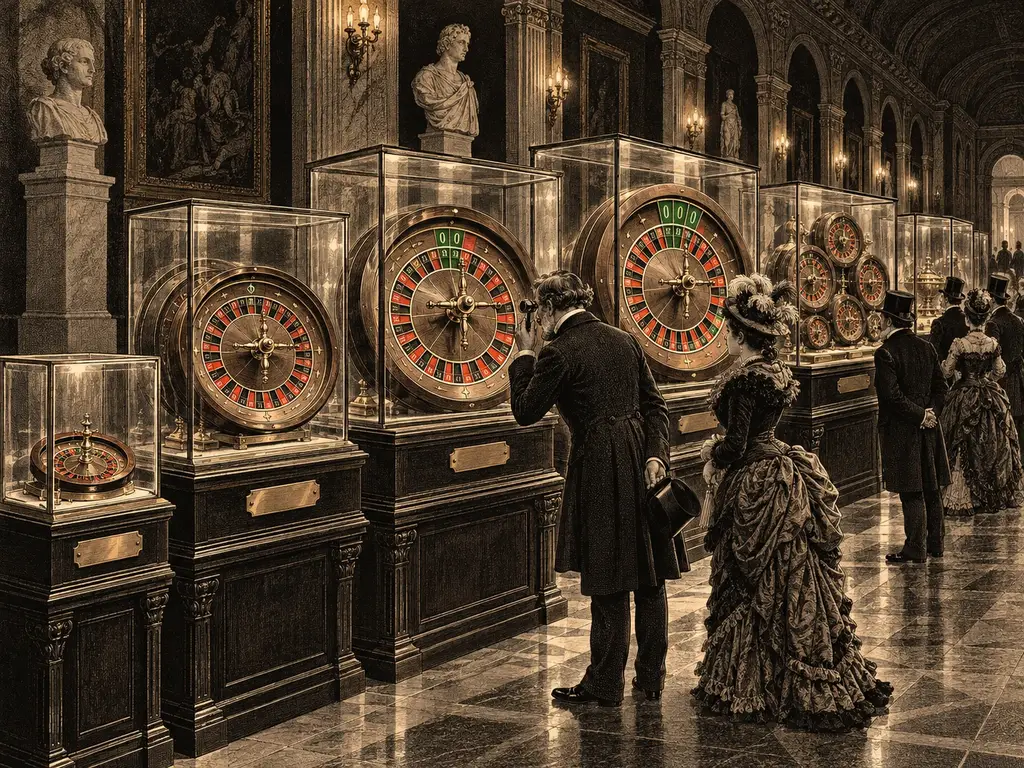
Judge a variant by three numbers: pockets, house edge on even money, and spins per hour. European (37, 2.70%) is the reference; French rules lower it; everything else raises it.
Three numbers
PocketsequipmentPocketOne of the 37 numbered compartments on the rotor. Also: slot, cup.Read full → decide the edge, because payoutsmoneyPayoutWhat a winning bet returns, quoted as “X to 1” on top of the returned stake.Read full → never change. Rules on zerowheelZeroThe single green pocket that no even-money, dozen or column bet covers; the source of the house edge. Also: single zero, 0.Read full → (la partageruleLa partageFrench rule: when zero hits, half of an even-money stake is returned. Halves the house edge on those bets to 1.35%.Read full →, en prisonruleEn prisonFrench rule: when zero hits, an even-money bet is held for the next spin instead of lost. Halves the house edge on those bets.Read full →) can halve the edge on even-money betsbetEven-money betRed/black, odd/even, high/low. 18 numbers, pays 1:1.Read full →. Spins per hour scale the cost of the evening. Everything else about a variant, the graphics, the presenter, the multipliers, the number of ballsequipmentBallThe small ball launched along the track against the rotor. Modern balls are ivorine or Teflon, 18–21 mm.Read full →, is either cosmetic or a change to the payout table that the help panel will disclose if you look.
Pockets
Single zero (37) is the European standard. Double zerovariantDouble zeroThe 00 pocket of the American wheel. Its presence raises the house edge from 2.70% to 5.26%.Read full → (38) adds 2.56 points of house edgemathHouse edgeThe share of each stake the casino keeps on average: 2.70% in European roulette.Read full →; triple zero (39) adds another 2.43. Mini roulette (13) looks small and friendly and carries a 7.69% edge because its payouts pretend there are 12 pockets. The rule is general: edge = (house pockets) / (total pockets), as long as the payouts are computed from the non-house count.
Rules on zero
La partage and en prison, found on French tables, halve the edge on even-money bets. They are the only common rules that work in the player’s favor, and the single most important thing to look for when choosing a table. Some American tables offer “surrender”, which is la partage on the double-zero wheel: 2.63% on even money instead of 5.26%.
Pace and payouts
Speed and auto roulette change spins per hour, which scales expected lossmathExpected lossExpected value times total amount wagered; the average amount lost over a session or a period.Read full → per hour without touching the odds. Game-show variants change the payout table itself, cutting the straight-up payout to fund multipliers. Double-ball changes the structure of outside betsbetOutside betA bet on the boxes surrounding the grid: dozens, columns and even-money bets.Read full →. Multi-wheel multiplies your stake. Each is described on its own page with the arithmetic.
How to read the pages
Each variant page lists pockets, edge, payouts that differ from European, where you are likely to meet it, and the arithmetic behind the edge. The comparison bars above are the whole decision for most players: find a single-zero table with la partage and a pace you can afford.
Questions
French if you can find it, European otherwise. Avoid double and triple zero when a single-zero table is available.
No. They publish their payout tables and RTPsmoneyRTPReturn to player: the share of wagers paid back on average. European roulette: 97.30%, which is 100% minus the 2.70% house edge.Read full →. They are usually more expensive, honestly.
European and French share a sequence; American uses another. Mini and the novelty formats have their own.
Comic relief
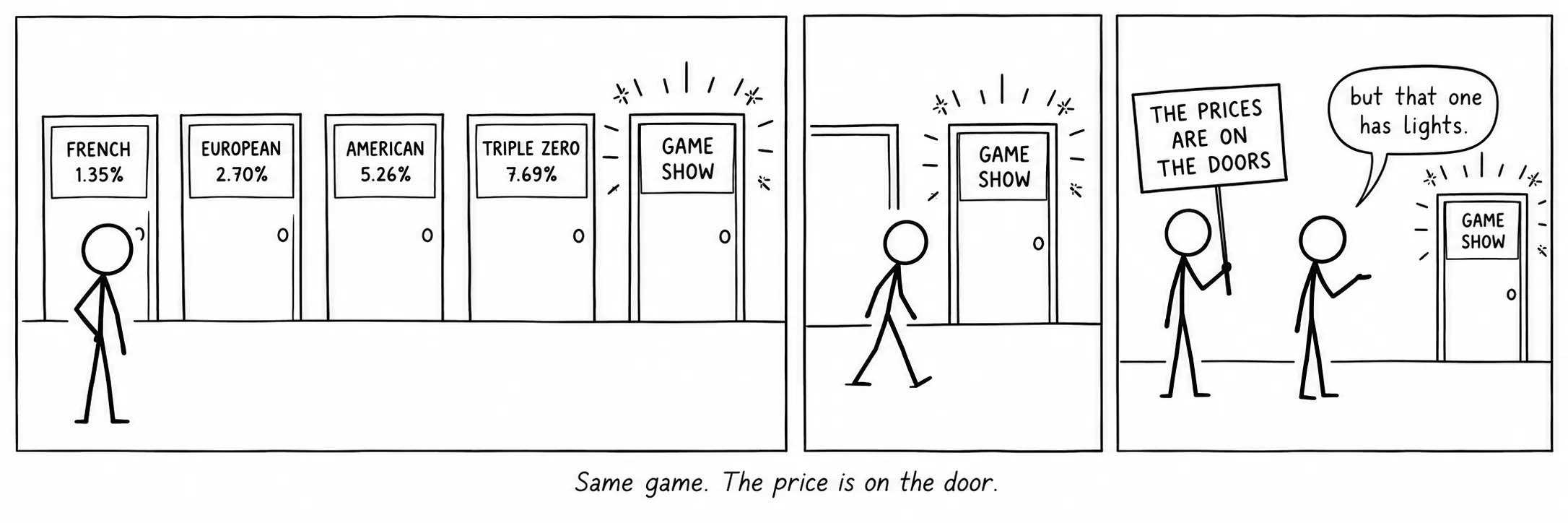
Same game. The price is on the door.
Sources
- Ethier, S. N. The Doctrine of Chances: Probabilistic Aspects of Gambling.
- UK Gambling Commission. Remote gambling and software technical standards.