Orphelins
“Orphans”: the eight pockets left over by voisins and tiers.
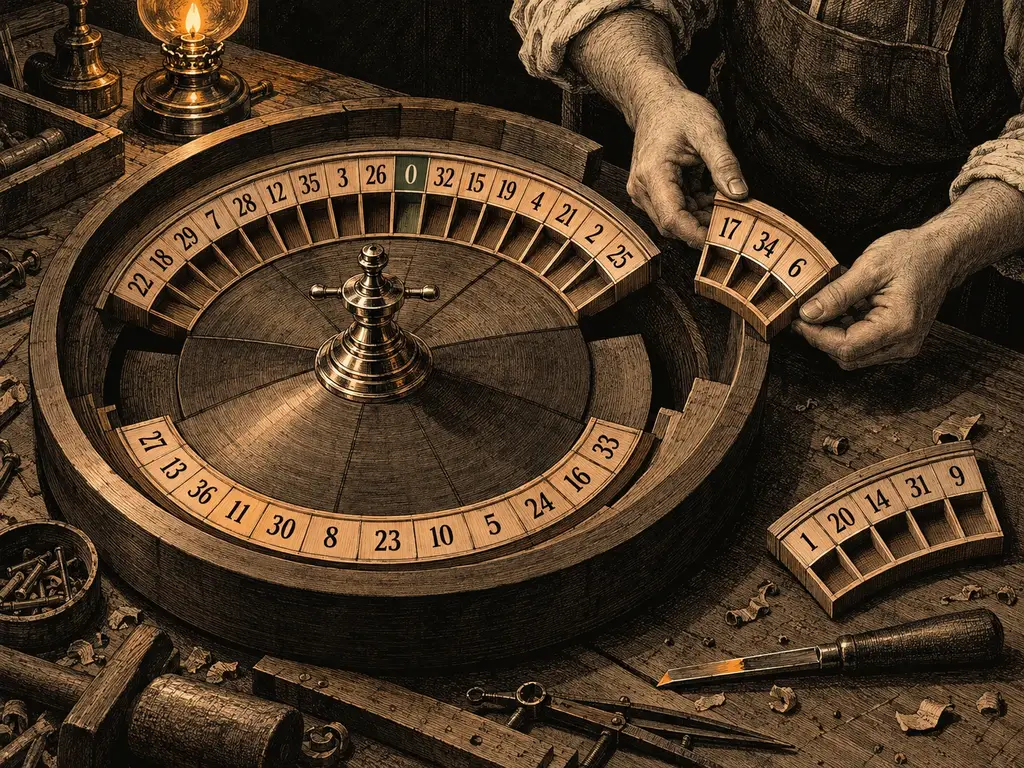
Five chips on eight numbers in two arcs: 17-34-6 and 1-20-14-31-9. ProbabilitymathProbabilityChance of an outcome, from 0 to 1 or 0% to 100%. One number: 1/37 = 2.70%.Read full → 21.62%.
The chips
One straight upbetStraight upA single number, pays 35:1.Read full → on 1, and splitsbetSplitTwo adjacent numbers, pays 17:1.Read full → on 6-9, 14-17, 17-20, 31-34. Five chipsmoneyChipA token representing a fixed amount, placed on the layout to make a bet. Also: check.Read full →, eight pocketsequipmentPocketOne of the 37 numbered compartments on the rotor. Also: slot, cup.Read full → in two separate arcs of the wheel: 17 34 6 on one side, 1 20 14 31 9 on the other. Note that 17 appears in two splits, so a hit on 17 pays twice. Announced as “orphelinsFR · sectorOrphelins“Orphans”: the eight numbers left over by voisins and tiers: 17, 34, 6 and 1, 20, 14, 31, 9.Read full →” (orphelins en chevalFR · splitChevalFrench for split: one chip on the line between two numbers, pays 17:1.Read full → when all splits; “orphelins en pleinFR · straight upPleinFrench for straight up: one chip on a single number, pays 35:1.Read full →” is a different, eight-chip, all-straight-up version).
Payout by pocket
A hit on 1 pays 35 and loses four chips: +31. A hit on 17 pays 17 twice and loses three chips: +31. A hit on any of the other six numbers pays 17 and loses four chips: +13. Any miss loses five.
Together
Voisins (17) + tiers (12) + orphelins (8) = 37. The three call betstableCall betA bet announced to the dealer rather than placed by hand, usually a wheel-sector bet such as voisins or tiers. Also “announced bet”.Read full → tile the whole wheel exactly once, which is why they are called the three sectorswheelSectorA contiguous arc of pockets on the wheel, as distinct from a group on the layout.Read full → and printed together on the racetracktableRacetrackThe oval strip on live and electronic layouts showing the numbers in wheel order, used to place neighbors and sector bets in one tap.Read full →. Betting all three at once covers every pocket with 20 chips and guarantees a result between −2 and +16 unitsmoneyUnitThe base stake a system or a player works in. Progressions are described in units so they apply at any table.Read full →, with an expected valuemathExpected valueThe average result per bet over the long run. −1/37 of the stake for every standard European bet.Read full → of −20/37: the three bets’ edges simply add.
Why orphans
The name is literal. When Monte Carlo standardized voisins and tiers, eight pockets were left without a family. Nobody designed orphelins; it is what remained.
At the table
“Orphelins, deux pièces” places five $2 chips. On the racetrack a single tap does it. Because the bet mixes a straight up and splits, some RNG interfaces list it under “special bets” rather than sectors.
Questions
It sits in two splits (14-17 and 17-20) because the layoutequipmentLayoutThe printed betting grid on the table. Also: table, felt, cloth.Read full → puts it between two other orphans.
Same 2.70% as everything else. It is the lowest-coverage sector, so the most volatile of the three.
Comic relief
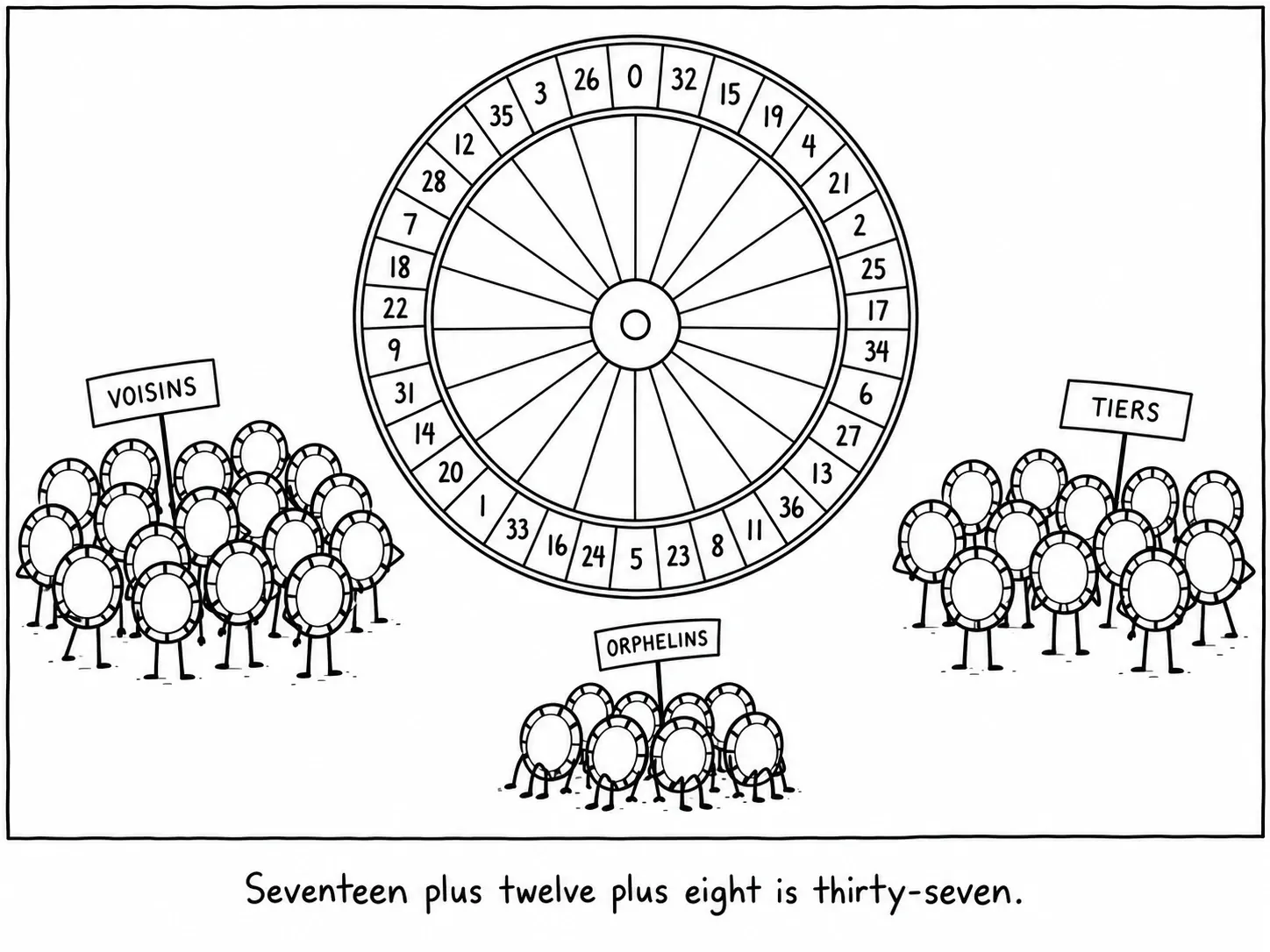
Seventeen plus twelve plus eight is thirty-seven.
Sources
- Ethier, S. N. The Doctrine of Chances: Probabilistic Aspects of Gambling.
- Wykes, A. The Complete Illustrated Guide to Gambling.