Roulette in Japan (Integrated Resorts)
A country with no legal casino yet, a first integrated resort under construction in Osaka for 2030, and a strict framework for what residents will be allowed to do there.

Japan legalized casino gaming inside integrated resorts in 2018. Only Osaka’s bid cleared the process; MGM Osaka on Yumeshima island is scheduled to open in autumn 2030 with about 470 tables. Residents will pay a ¥6,000 entry fee and be limited to three visits a week and ten a month. Online casino play remains illegal.
Where things stand
Gambling in Japan is prohibited by the Penal Code with specific exceptions: public lotteries, racing (horses, bicycles, boats, motorcycles) and the pachinko industry, which operates as a prize game. The IR Promotion Act (2016) and IR Implementation Act (2018) created a further exception for up to three casinos inside integrated resorts. Yokohama withdrew in 2021 after a mayoral election; Tokyo and Nagoya never submitted bids; Nagasaki’s bid failed on financing; Osaka’s was certified in 2023. Construction began in April 2025 on Yumeshima, the Expo 2025 island, with opening planned for autumn 2030.
What the floor will look like
Plans filed for MGM Osaka describe about 470 tables and several thousand electronic gaming machines across a floor limited to 3% of the complex. Roulette will be present, almost certainly single zerowheelZeroThe single green pocket that no even-money, dozen or column bet covers; the source of the house edge. Also: single zero, 0.Read full → on MGM’s international pattern, with electronic stadiums for low-stakes play. The commission certifies every game and device; approved game rules will be published before opening.
Online and the gray market
Online casino play is illegal for people in Japan, and the point has been enforced: police have arrested players, not only operators, for using offshore casino sites, and 2025 amendments to the Gambling Addiction Countermeasures Act prohibit showing such sites to users in Japan or publishing anything that steers them there. Streamers and affiliates have been prosecuted. There is no licensed online roulette in Japan and none is planned.
Pachinko and the context
Japan already has one of the largest gambling industries in the world by turnovermoneyTurnoverThe total amount wagered over a session or period, counting re-bet winnings. Also: handle, action.Read full →, in pachinko parlors that avoid the casino ban by paying prizes exchanged for cash off-premises. The IR debate was shaped by this: supporters argued that regulated casinos are safer than the status quo; opponents pointed to addiction rates already among the highest measured. The entry fee and visit caps are the compromise.
IR Promotion Act passes after a decade of bills.
IR Implementation Act: three licenses, entry fee, visit caps.
Japan Casino Regulatory Commission established.
Yokohama withdraws after a mayoral election; Tokyo and Nagoya never bid.
Osaka’s area development plan certified; Nagasaki’s rejected.
Groundbreaking on Yumeshima, April; online casino crackdown written into law.
MGM Osaka scheduled to open in the autumn.
Advice for a future visitor
Until 2030 there is no legal roulette in Japan and no legal online roulette either. From 2030, expect a single-zero wheel at a very large, very well-staffed resort, a free entry for passport holders and a ¥6,000 gate for residents, who will also need to show a My Number card. Expect the quietest, most heavily regulated casino floor in Asia.
Questions
Not legally. There are no casinos, and online play is an offense for the player.
The law allows three. Only Osaka has been certified; a second round of applications has been discussed and not opened.
The same logic as Singapore’s levy: let tourists gamble, discourage residents. Japan added visit caps and ID checks on top.
Comic relief
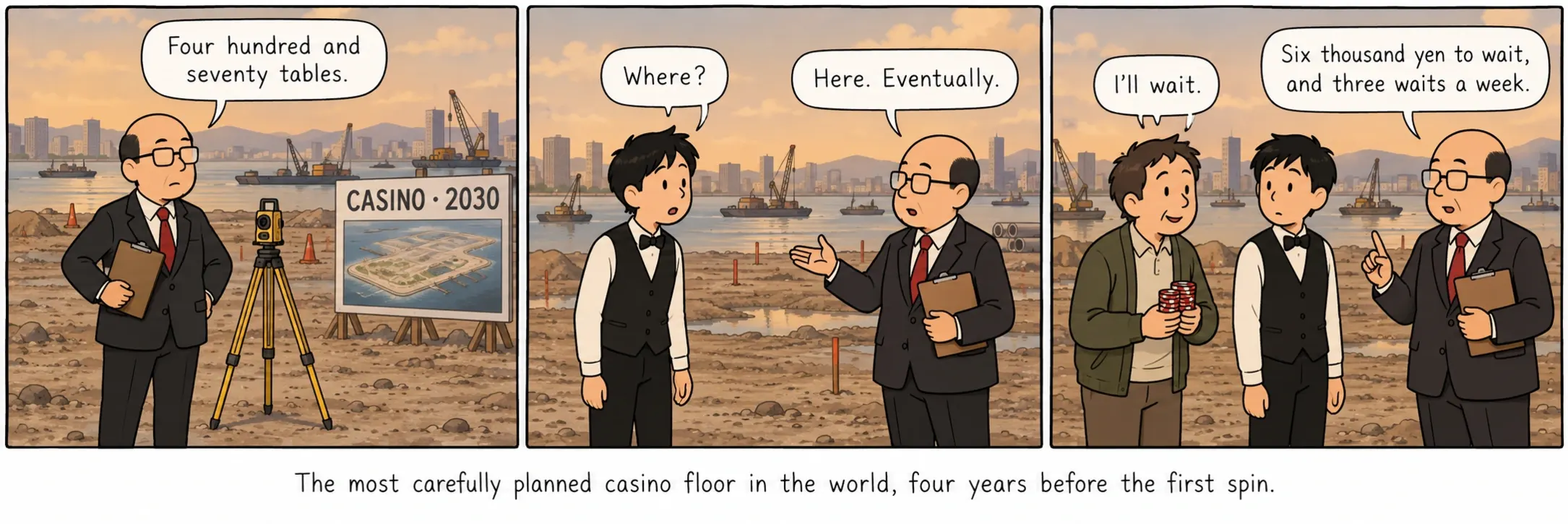
The most carefully planned casino floor in the world, four years before the first spin.
Sources
- Act on Development of Specified Integrated Resort Districts (IR Implementation Act), 2018.
- Japan Casino Regulatory Commission.
- Osaka IR KK project filings, 2025–2026.